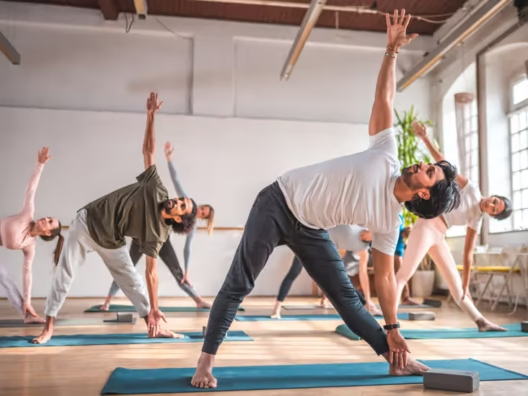





Waking up before the sun, the world is often still, quiet, and ripe for possibility. Imagine tapping into that stillness, not with a jolt of caffeine, but with a gentle unfurling of your body and mind. This isn’t about grand acrobatics or pretzel-like contortions; it’s about finding an easy and accessible way to kickstart your day with intention and vitality. Embracing a morning yoga routine can transform your waking moments from a hurried rush into a serene, empowering ritual. It’s about more than just stretching; it’s about creating space, fostering calm, and setting a positive tone that ripples through every hour that follows.
This guide is designed to help you discover your perfect, easy morning yoga routine, no matter your experience level. We’re talking about simple, effective movements and mindful moments that gently awaken your body, clear your mind, and infuse your spirit with a vibrant energy that coffee can only dream of. Get ready to ditch the grogginess and welcome a new day feeling centered, strong, and ready to vibe!
Why Embrace a Morning Yoga Routine? Unlocking Your Day’s Potential
So, why roll out of bed and onto a mat when you could hit snooze again? The reasons are plentiful and powerful. A consistent morning yoga routine isn’t just a fleeting trend; it’s a profound practice that impacts your physical, mental, and emotional well-being. Think of it as hitting the reset button before the chaos of the day even begins.
Physically, a gentle morning flow is a fantastic way to wake up stiff muscles and joints. After hours of sleep, our bodies can feel rigid. Yoga helps to increase flexibility, improve circulation, and gently build strength. Poses like Cat-Cow or Downward-Facing Dog can decompress the spine, stretch the hamstrings, and open up the chest, reversing the slouched posture many of us adopt while sleeping or sitting at a desk. Over time, this consistent movement can improve your posture, reduce everyday aches and pains, and even enhance your balance. It’s like giving your internal engine a gentle tune-up, preparing it for optimal performance throughout the day.
Beyond the physical, the mental benefits are arguably even more transformative. Starting your day with mindful movement and breathwork provides a buffer against stress. It gives you a dedicated moment to quiet the mental chatter, slow down your thoughts, and cultivate a sense of calm. Studies have shown that even short periods of mindful movement can reduce levels of cortisol, the body’s primary stress hormone. You’re essentially training your brain to be more present and less reactive, which can be a game-changer when faced with morning deadlines or unexpected challenges. This mental clarity and focus can boost productivity, improve decision-making, and help you approach tasks with a more positive outlook. It’s a moment of conscious calm before the inevitable hustle.
Emotionally, a morning yoga routine can be a powerful mood booster. Moving your body, even gently, releases endorphins, those wonderful “feel-good” chemicals. Combining this with mindful breathing and perhaps a moment of gratitude can truly shift your emotional state. Instead of waking up feeling anxious or overwhelmed, you can cultivate feelings of peace, gratitude, and self-compassion. This positive emotional baseline can influence your interactions with others, making you more patient, empathetic, and resilient throughout the day. It’s about nurturing your inner self and setting a kind, compassionate tone for your day.
Furthermore, a regular morning practice can significantly impact your energy levels. While it might seem counterintuitive to exert energy first thing, yoga actually helps to create energy by stimulating circulation and activating your entire system. Many people find that a morning flow provides a more sustained, natural energy boost than coffee, without the subsequent crash. This increased vitality isn’t just physical; it’s a holistic sense of aliveness that fuels your productivity and creativity. You feel more present, more engaged, and more ready to tackle whatever comes your way.
In the long term, making morning yoga a consistent habit contributes to overall health and longevity. It encourages better sleep patterns, improves digestion, strengthens the immune system, and supports cardiovascular health. It’s a proactive investment in your well-being, building a foundation of health and resilience that pays dividends for years to come. Think of it as a daily dose of preventive medicine, served with a side of zen.
Setting the Scene: Creating Your Perfect Morning Yoga Sanctuary
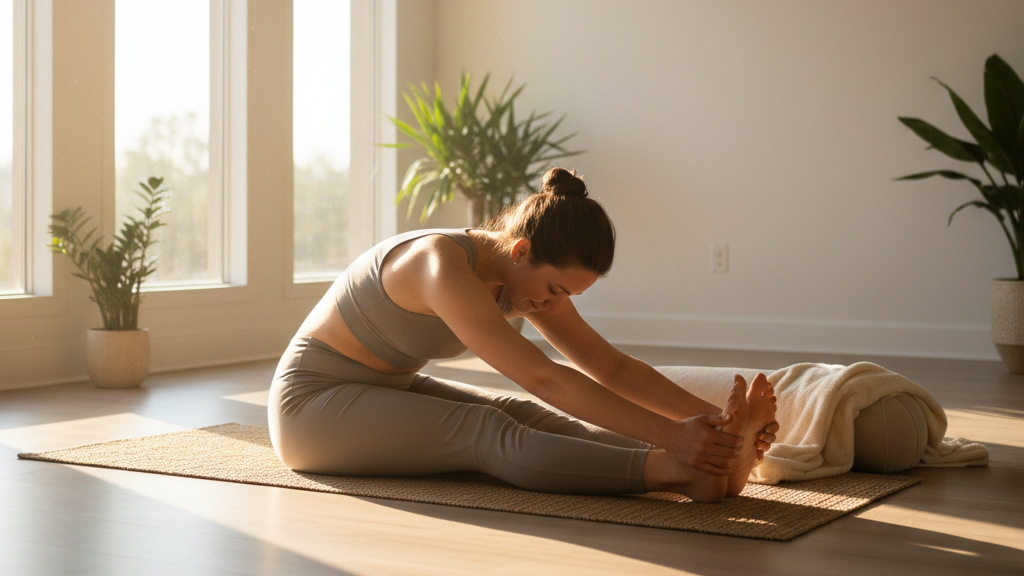
You don’t need a fancy studio or exotic props to enjoy an easy morning yoga routine. What you do need is a little intentionality in creating a space that feels inviting and conducive to peace. It’s about carving out a small sanctuary, however temporary, where you can connect with yourself.
First, consider your space. Find a spot in your home that offers a little quiet and enough room to stretch out comfortably. This might be a corner of your bedroom, a clear space in the living room, or even a patio if the weather allows. The key is to minimize clutter. A cluttered environment can lead to a cluttered mind, making it harder to focus. Take a minute to clear away any distractions – laundry, books, yesterday’s coffee mug. A tidy space signals to your brain that it’s time for calm. Natural light is a huge bonus; it helps regulate your circadian rhythm and instantly uplifts your mood. Position yourself near a window if possible to soak up those morning rays.
Next, think about essential gear. The most important piece of equipment is a yoga mat. It provides cushioning, grip, and defines your practice area. If you don’t have one, a thick towel or even a carpeted floor can work in a pinch, but a mat offers better stability. Beyond that, props are entirely optional, especially for an “easy” routine. However, a block or two can be helpful for bringing the floor closer to you in certain poses, making stretches more accessible. A strap (or a belt/scarf) can assist with deeper stretches, and a blanket can provide comfort for seated poses or Savasana. Don’t feel pressured to buy anything; start with what you have.
The ambiance plays a crucial role in setting the tone. Soft, ambient lighting is ideal – think natural light filtering through curtains or a gentle lamp, rather than harsh overhead lights. If you enjoy music, create a calming playlist. Instrumental tunes, nature sounds, or gentle meditation music can enhance your experience. Avoid anything with lyrics that might distract your thoughts. Essential oils can also elevate your space. Diffusing scents like lavender for relaxation, peppermint for invigoration, or frankincense for grounding can subtly influence your mood and deepen your practice. Just a few drops can make a big difference.
Finally, and perhaps most importantly, prepare your mindset. Before you even step onto your mat, take a moment. Release any expectations about what your practice should look like. Your morning yoga isn’t about perfection; it’s about presence. Let go of the need to achieve a certain pose or hold a stretch for a specific duration. Simply come to your mat with an open mind and a willingness to listen to your body. Remind yourself that this time is for you, a gift you’re giving yourself to start the day aligned and refreshed. This shift in perspective is what truly transforms movement into a meditative, healing practice.
The Anatomy of an Easy Morning Flow: Poses for Every Body
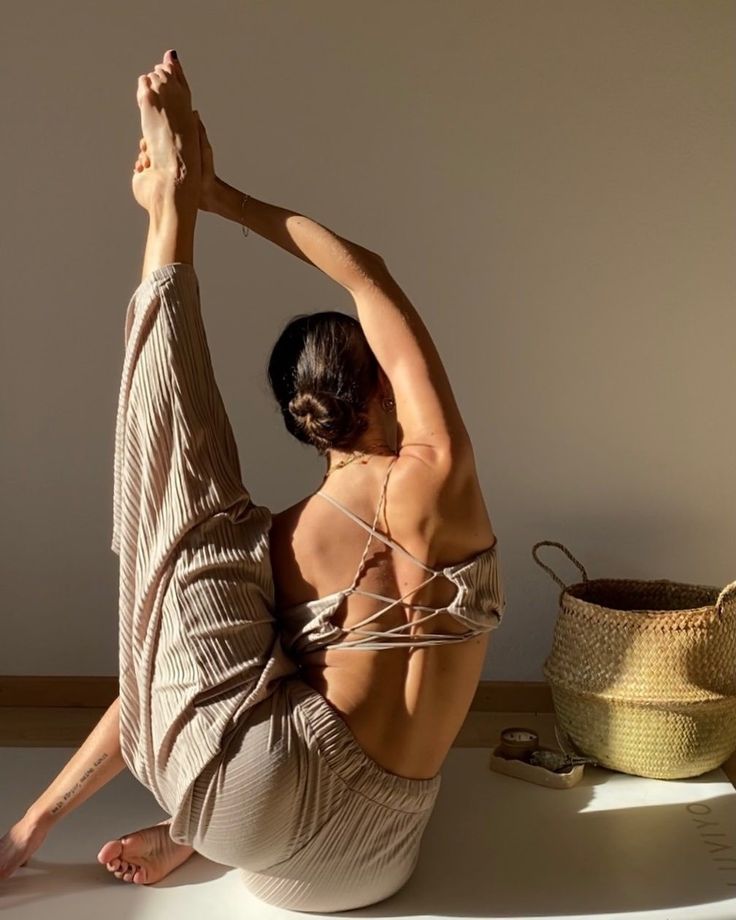
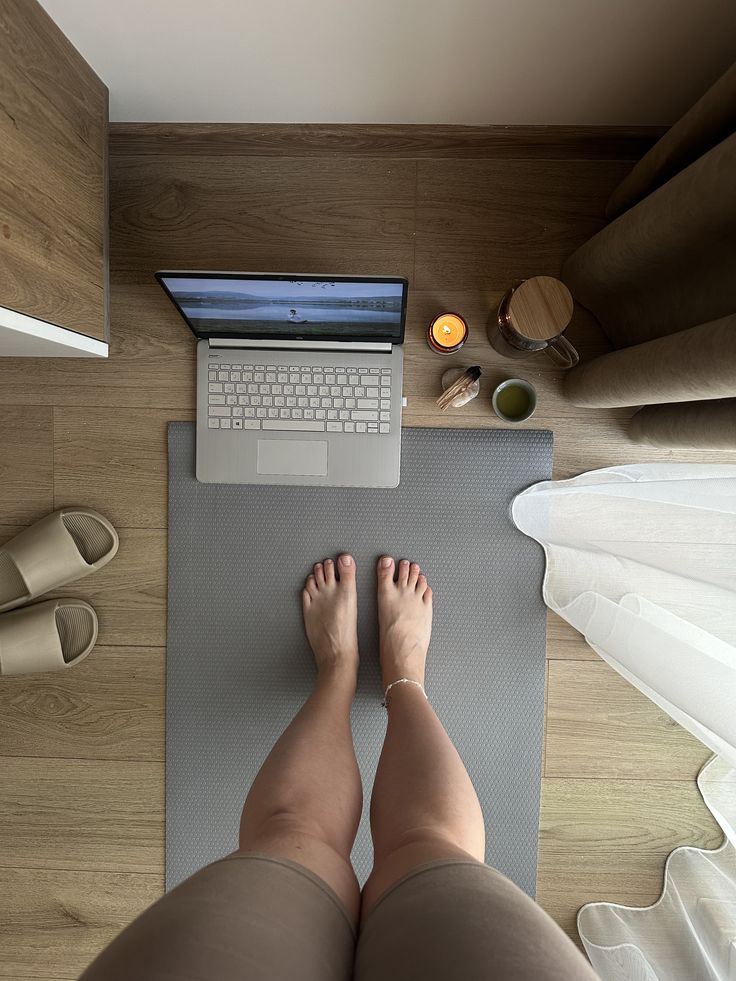
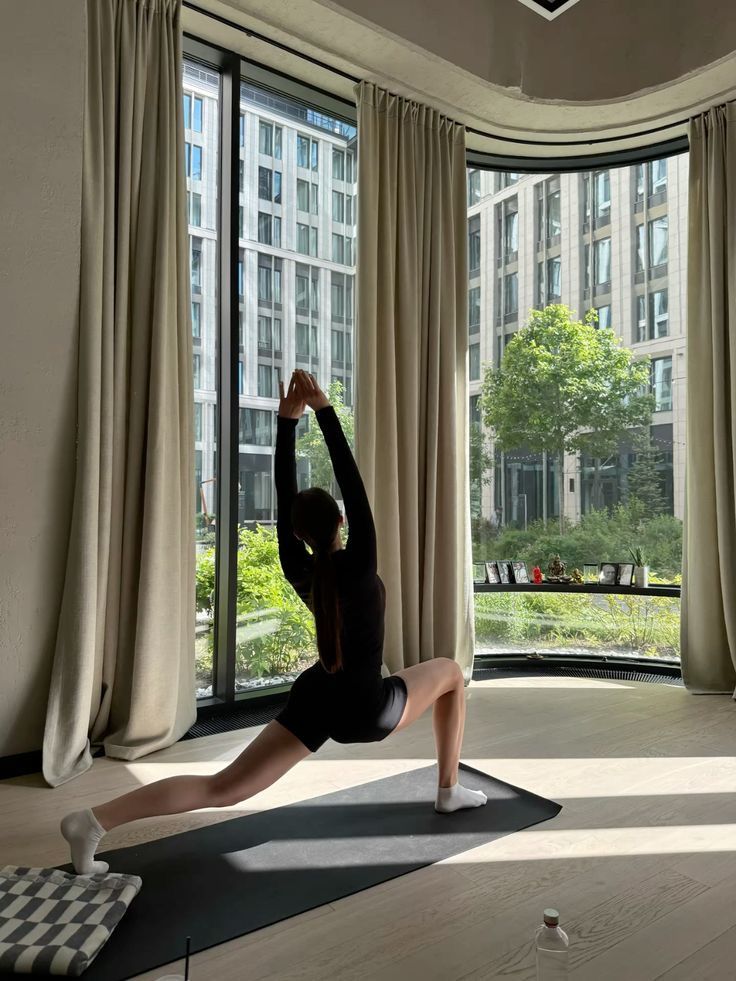
Okay, ready to move? This easy morning yoga routine focuses on gentle movements that awaken your body without overwhelming it. Remember, listen to your body. If something doesn’t feel right, back off or skip it. This is your practice.
1. Gentle Awakening and Breath Focus (5-7 minutes)
- Lying on Your Back, Knees Bent (Constructive Rest Pose): Start lying down on your mat, knees bent, feet flat on the floor hip-width apart. Let your knees gently fall together. Place one hand on your belly and one on your heart. Close your eyes and simply notice your breath. Feel your belly rise and fall. Allow your body to settle. Take 5-10 deep, conscious breaths.
- Knees-to-Chest Pose (Apanasana): Gently hug your knees into your chest. You can rock side to side slightly to massage your lower back. This releases tension in the hips and spine.
- Supine Spinal Twist: From knees-to-chest, let your knees fall over to one side (e.g., to the right), keeping both shoulders grounded. Extend your opposite arm (left arm if knees are right) out to the side. Gaze gently over that extended arm. Hold for 5-10 breaths, then switch sides. This gently twists and releases the spine.
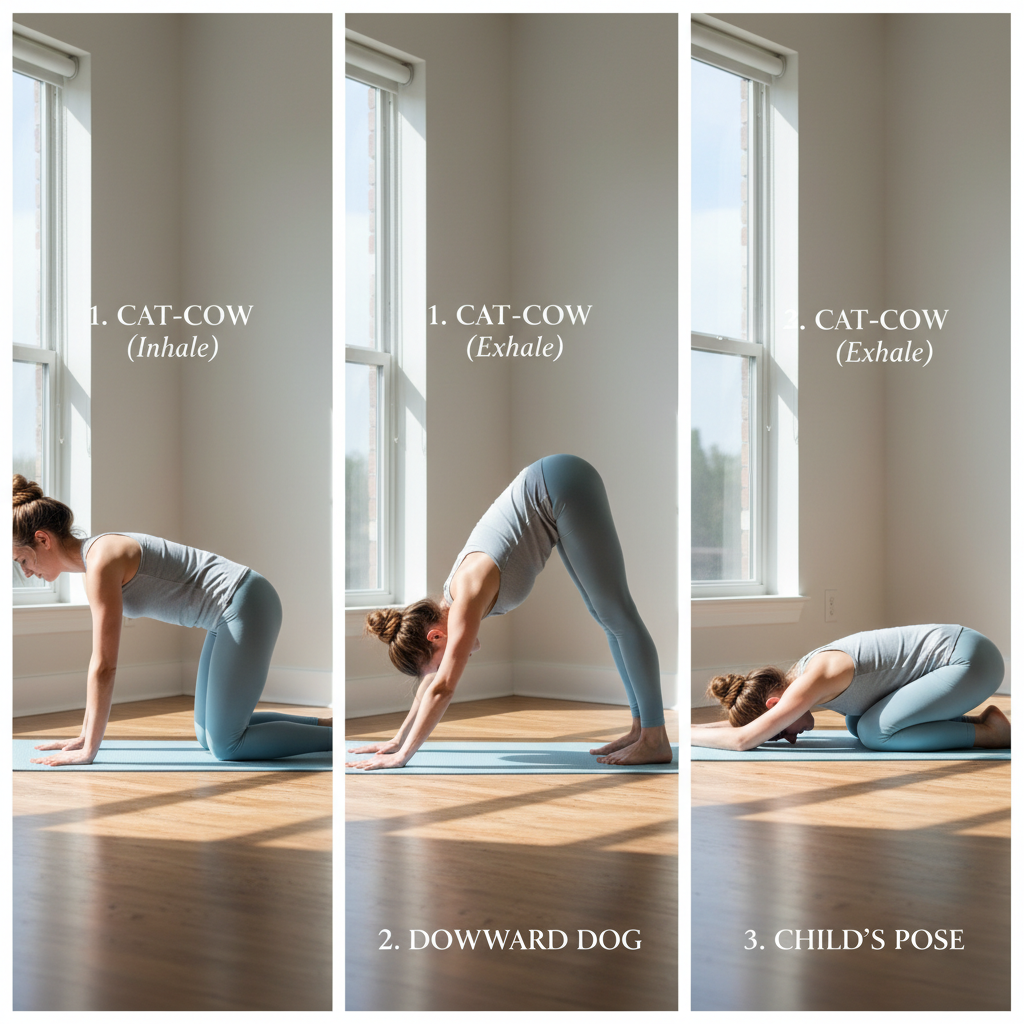
- Cat-Cow (Marjaryasana-Bitilasana): Roll onto your hands and knees in a tabletop position. Align your wrists under your shoulders and knees under your hips. Inhale, drop your belly, lift your chest and tailbone (Cow pose). Exhale, round your spine, tuck your chin and tailbone (Cat pose). Flow through these movements slowly and mindfully, coordinating with your breath, for 5-8 rounds. This warms up the spine and builds flexibility.
2. Foundational Flow for Energy (10-15 minutes)
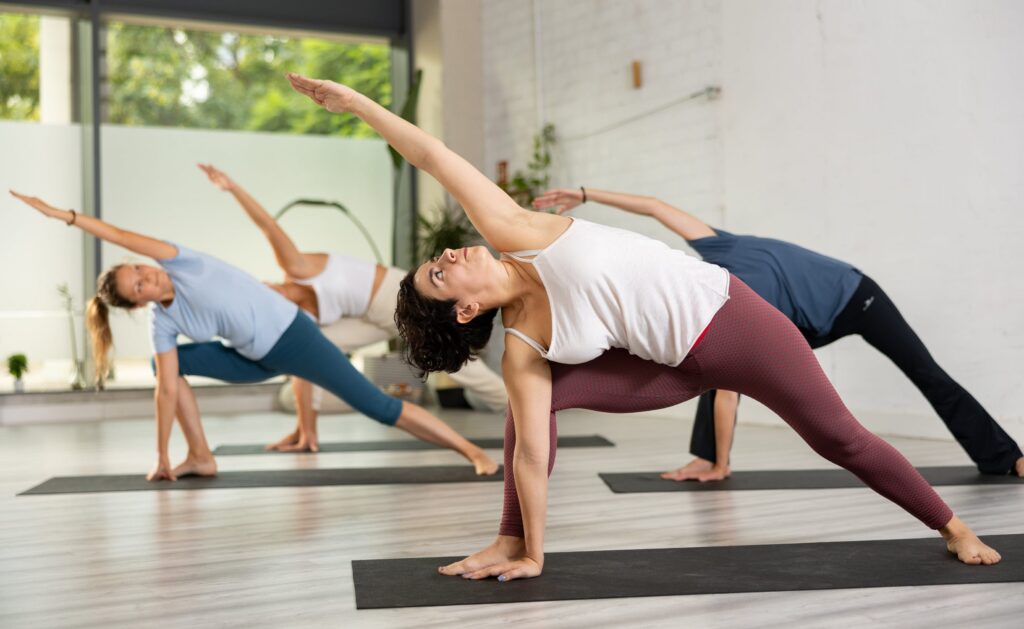
- Child’s Pose (Balasana): From tabletop, widen your knees, keep your big toes touching, and sink your hips back towards your heels. Extend your arms forward or rest them alongside your body. Forehead to the mat. This is a grounding and restorative pose. Take a few deep breaths here.
- Downward-Facing Dog (Adho Mukha Svanasana): From Child’s Pose, or tabletop, tuck your toes, lift your hips high, forming an inverted ‘V’ shape. Keep a slight bend in your knees, especially if your hamstrings are tight. Press through your hands, drawing your shoulders away from your ears. Pedal out your feet, bending one knee then the other, to gently stretch the calves and hamstrings. Hold for 5-8 breaths.
- Modified Sun Salutation (Surya Namaskar): A simplified version to flow:
- Inhale: Come to Halfway Lift (Ardha Uttanasana) from Down Dog (step feet forward or walk hands back to meet feet). Flat back, hands on shins or thighs.
- Exhale: Forward Fold (Uttanasana). Let your head hang heavy.
- Inhale: Rise up to Mountain Pose (Tadasana), arms sweep overhead.
- Exhale: Hands to heart center.
- Inhale: Sweep arms up.
- Exhale: Forward Fold.
- Inhale: Halfway Lift.
- Exhale: Step back to Plank Pose. (Option: drop knees for modified plank).
- Inhale: Gently lower knees, chest, and chin to the mat (or chest/belly for beginners).
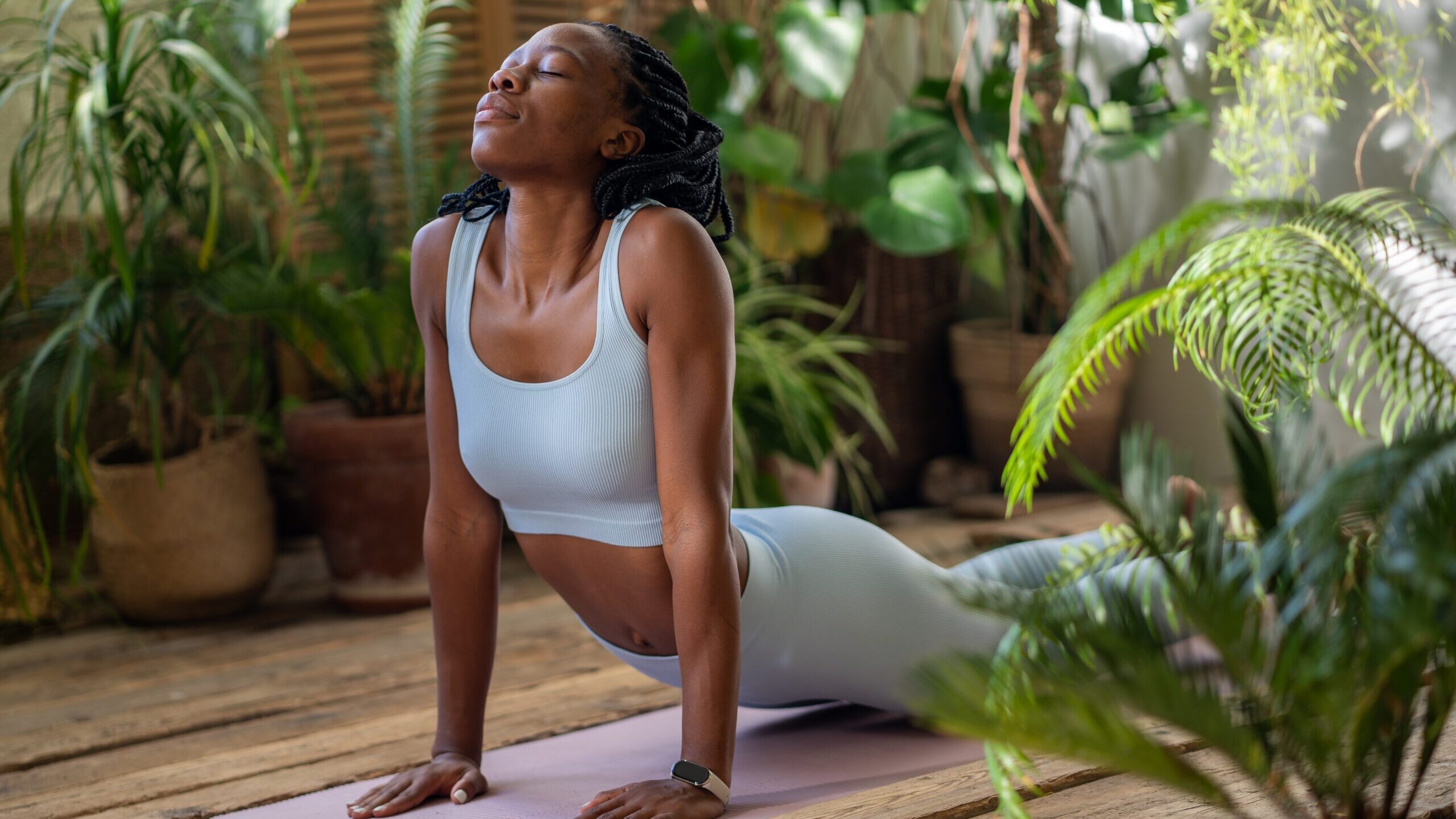
- Inhale: Slide forward into a small Cobra Pose (Bhujangasana). Lift head and chest, shoulders away from ears.
- Exhale: Push back to Child’s Pose or Downward-Facing Dog.
- Repeat this sequence 2-3 times, flowing with your breath.
3. Standing Poses for Grounding & Balance (7-10 minutes)
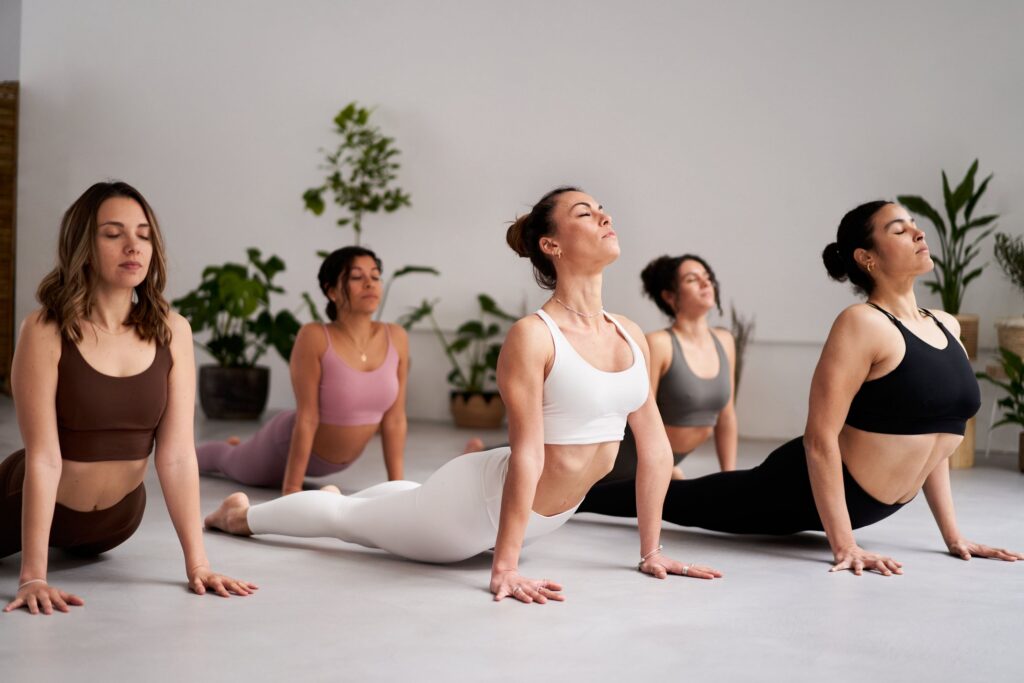
- Mountain Pose (Tadasana): Stand tall, feet hip-width apart or together, weight evenly distributed. Engage your thighs, lift your kneecaps, tuck your tailbone slightly. Shoulders down and back. Hands at your sides or at heart center. Feel grounded.
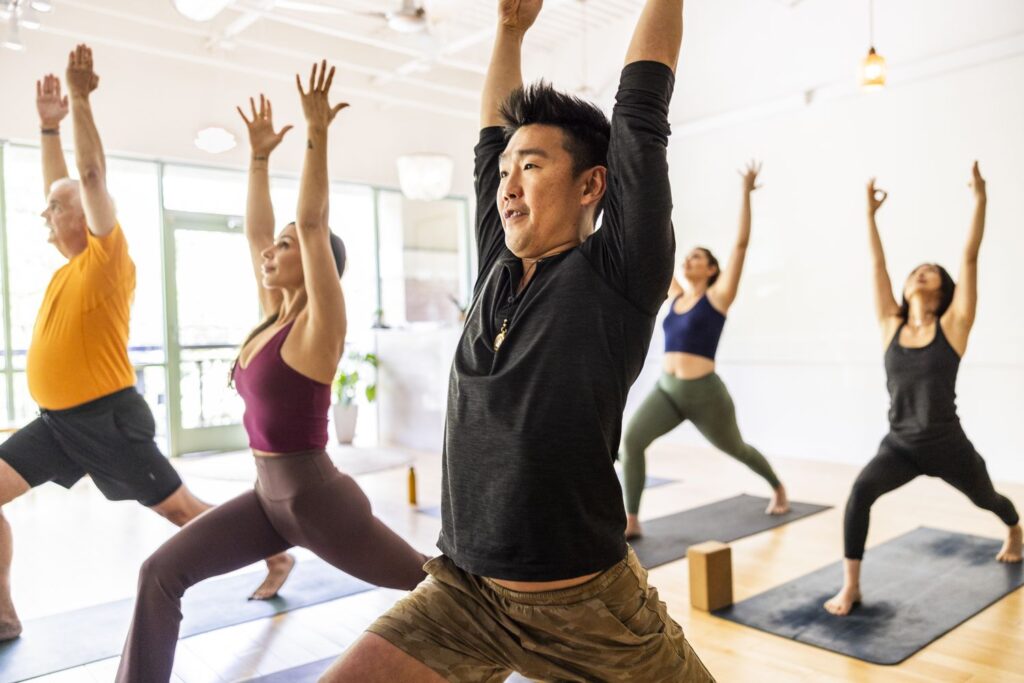
- Warrior II (Virabhadrasana II): Step your feet wide apart. Turn your right foot out 90 degrees, left foot slightly in. Bend your right knee directly over your ankle. Extend your arms out to the sides at shoulder height, gaze over your right fingertips. Hold for 3-5 breaths, then switch sides. This builds strength and focus.
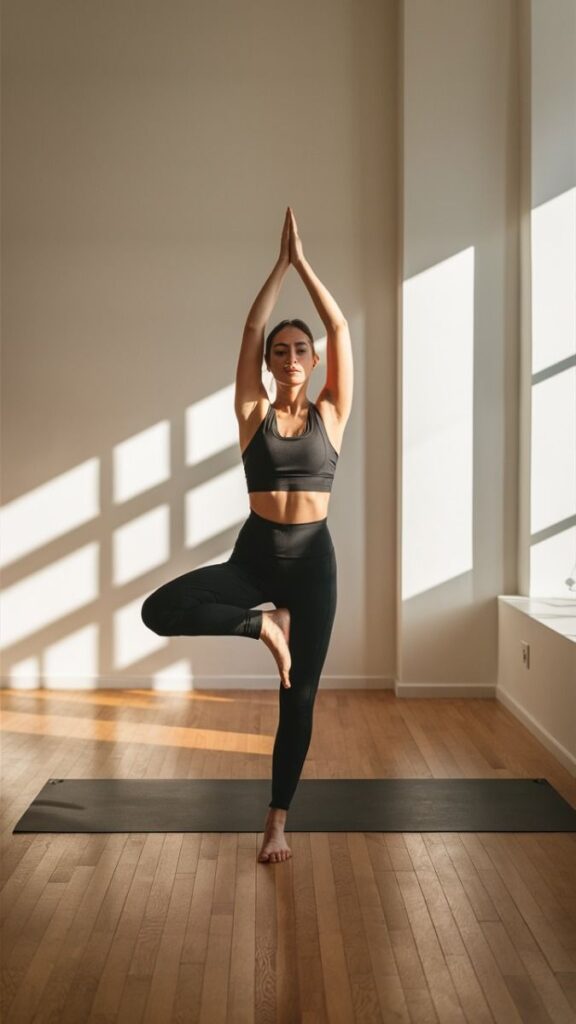
- Tree Pose (Vrksasana): From Mountain Pose, shift weight to your left foot. Bring your right foot to your inner left thigh, calf, or ankle (avoid knee). Hands at heart center or extended overhead. Find a focal point (drishti) to aid balance. Hold for 3-5 breaths, then switch sides. This improves balance and concentration.
4. Seated and Supine for Cool Down (5-7 minutes)
- Seated Forward Fold (Paschimottanasana): Sit with legs extended forward. Inhale to lengthen your spine, exhale to fold forward from your hips, reaching for your shins, ankles, or feet. Keep a slight bend in your knees if needed. Feel the stretch in your hamstrings and spine. Hold for 5-8 breaths.
- Reclined Spinal Twist (Supta Matsyendrasana): Lie on your back. Hug your knees to your chest, then let them fall to one side. Extend your arms out like a ‘T’. Gaze in the opposite direction of your knees. Breathe into the twist. Hold for 5-8 breaths, then switch sides.
- Happy Baby Pose (Ananda Balasana): Lie on your back. Hug your knees to your chest, then open your knees wider than your torso. Grab the outsides of your feet (or ankles/shins). Flex your feet, drawing your knees towards your armpits. Keep your lower back grounded. Gently rock side to side if it feels good. This opens the hips and releases the lower back.
5. Savasana (Corpse Pose) (5-10 minutes)
- The most important pose! Lie flat on your back, legs extended, arms at your sides, palms facing up. Let your feet fall open naturally. Close your eyes. Allow your body to completely relax and melt into the mat. Release any tension you might be holding. Simply observe your breath and let go. This allows your body to integrate the benefits of your practice.
Beyond the Poses: Integrating Breathwork (Pranayama) and Mindfulness
Yoga is far more than just physical postures; it’s a holistic practice that deeply integrates breath and mind. Adding even short periods of breathwork (pranayama) and mindfulness can profoundly deepen your morning routine, making it a truly transformative experience.
The breath is our life force, and conscious breathing is a powerful tool for regulating our nervous system. In the morning, when you might feel scattered or groggy, focusing on your breath can bring you back to center.
- Deep Diaphragmatic Breathing (Belly Breathing): This is the foundation of all pranayama. Lie down or sit comfortably. Place one hand on your chest and one on your belly. Inhale slowly and deeply through your nose, feeling your belly rise first, then your chest. Exhale slowly through your nose, feeling your chest fall, then your belly. The key is to make the exhale slightly longer than the inhale. Do this for 2-3 minutes. This calms the nervous system, reduces stress, and increases oxygen flow.
- Nadi Shodhana (Alternate Nostril Breathing) – Simplified: This is an incredible technique for balancing energy and calming the mind. Sit comfortably. Close your right nostril with your right thumb. Inhale slowly through your left nostril. Then, release your thumb, close your left nostril with your ring finger, and exhale slowly through your right nostril. Inhale through your right nostril, then close it with your thumb and exhale through your left. This completes one round. Continue for 3-5 rounds. This helps to clear energetic channels, balance the left and right hemispheres of the brain, and bring a sense of harmony. Don’t worry about perfection; just try it.
Beyond specific breath techniques, cultivate mindfulness throughout your entire routine. Mindfulness is simply the practice of being fully present and aware of the current moment, without judgment. As you move through your poses, notice the sensations in your body. How does the stretch feel? Where do you feel tension? What’s the quality of your breath? When your mind wanders (and it will!), gently guide it back to your breath or the physical sensations.
Consider adding a short gratitude practice after your Savasana. Before you fully re-enter the day, spend 1-2 minutes silently listing three things you are grateful for. They can be simple: the warmth of your blanket, the sound of birds, the taste of your morning coffee. This simple practice can powerfully shift your perspective and infuse your day with positivity.
You can also incorporate a brief meditation after your yoga poses. Sit comfortably, close your eyes, and simply observe your breath without trying to change it. When thoughts arise, acknowledge them gently and let them pass, returning your focus to your breath. Even 5 minutes of this can significantly enhance mental clarity and emotional regulation, setting a peaceful tone for your entire day. This integrated approach elevates your morning routine from just exercise to a truly holistic practice for well-being.
Crafting Your Personalized Routine: Flexibility and Consistency
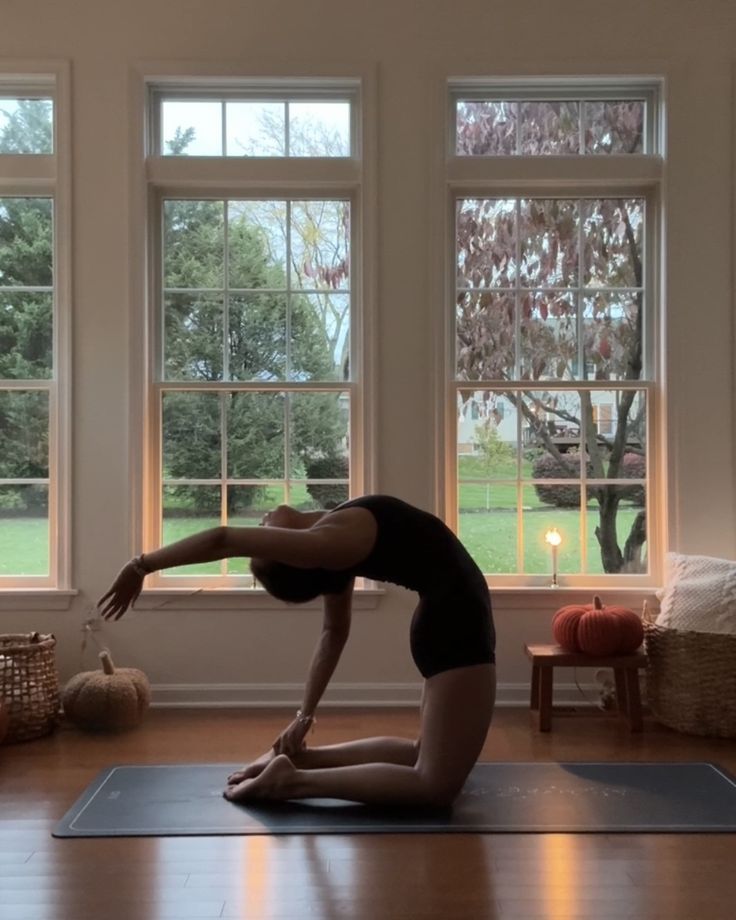

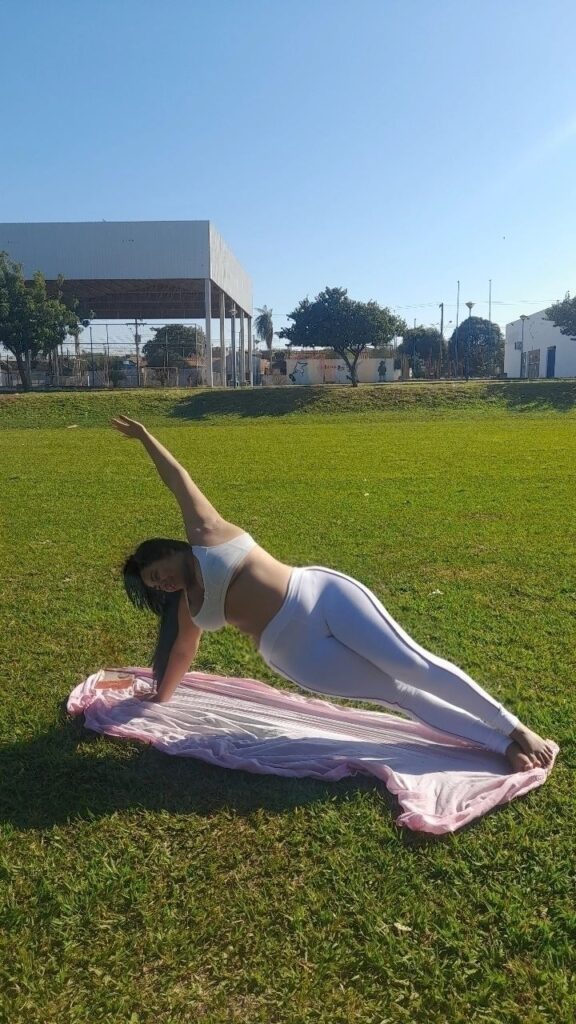
The beauty of a morning yoga routine is its adaptability. There’s no one-size-fits-all, and the “perfect” routine is the one you can stick with consistently. The key is to listen to your body, your schedule, and your energy levels each day.
Listen to Your Body: Some mornings you’ll wake up feeling energetic and ready for a slightly more dynamic flow. Other mornings, you might feel stiff, tired, or emotionally drained, calling for a gentler, more restorative practice. Don’t force it. If your hamstrings are screaming, bend your knees in Downward Dog. If your shoulders are tight, opt for gentler arm movements. The goal is to nurture, not punish, your body. Check in with yourself before you start: “How do I feel today? What does my body need?” This mindful approach fosters a deeper connection with yourself.
Adjust for Time:
- 5-10 Minutes: The Quick Vibe: Perfect for super busy mornings. Focus on 2-3 key poses: Cat-Cow, Downward Dog, a quick standing stretch like a Half Sun Salutation, and 2 minutes of Savasana or breath focus. The goal is to move, breathe, and set an intention.
- 15-20 Minutes: The Mid-Length Flow: This allows for a more comprehensive warm-up, a few standing poses, and a good cool-down. Follow the ‘Anatomy of an Easy Morning Flow’ with fewer repetitions or holds. Include a short breathwork practice.
- 30+ Minutes: The Full Reset: If you have the luxury of time, you can delve deeper into each section. Hold poses longer, explore variations, and dedicate more time to breathwork and meditation. This is where you can truly savor the experience and reap maximum benefits.
Making It a Habit: Small Steps and Rewards:
Consistency is more important than duration or intensity. Even 5 minutes every day is more beneficial than an hour once a week.
- Start Small: Don’t aim for 30 minutes right away if you’re new. Begin with 5-10 minutes and gradually increase as it feels comfortable.
- Schedule It: Treat your morning yoga like any other important appointment. Put it in your calendar.
- Create a Cue: Link it to an existing morning habit. Maybe after you brush your teeth, you immediately roll out your mat.
- Prepare the Night Before: Lay out your mat, choose your outfit, even set up your water bottle. Removing friction makes it easier to start.
- Be Kind to Yourself: If you miss a day (or a week!), don’t beat yourself up. Just acknowledge it and start fresh the next day. Progress, not perfection.
- Find Your “Why”: Remind yourself of the benefits you feel. Does it make you less stressed? More focused? Happier? This intrinsic motivation is powerful.
- Celebrate Small Wins: Acknowledging your commitment, even internally, reinforces the positive behavior.
Overcoming Common Challenges:
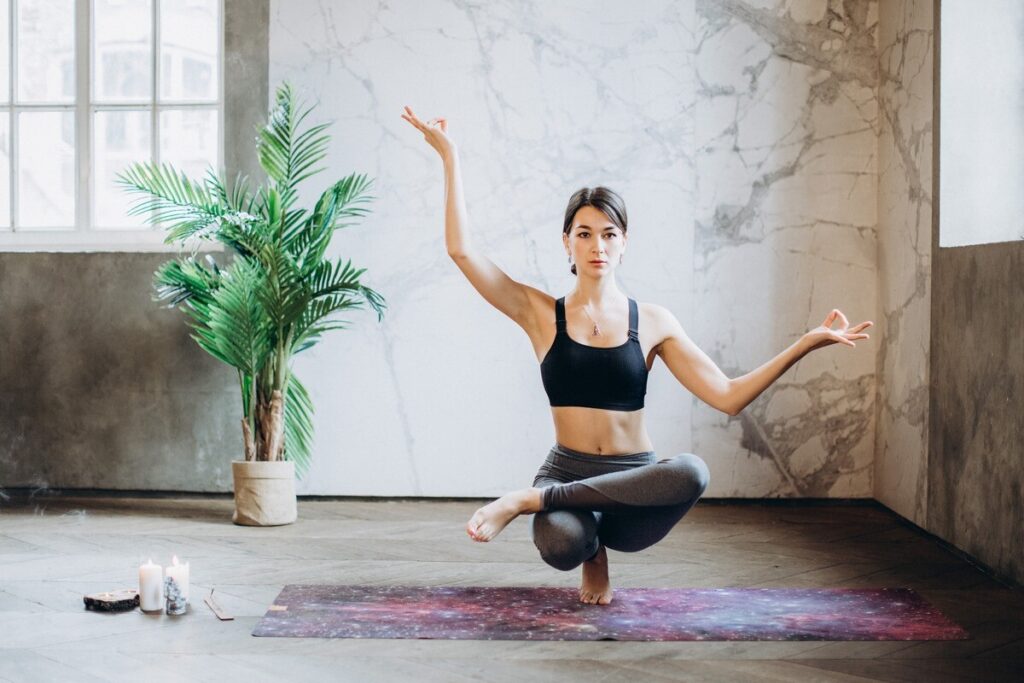
- “I don’t have time!”: Re-evaluate your morning routine. Can you wake up 10 minutes earlier? Can you swap scroll-time on your phone for mat-time? Remember, even 5 minutes counts.
- “I’m too stiff/not flexible enough”: Everyone starts somewhere! Yoga is not about being flexible; it’s about becoming aware of your body and working with what you have. Use props, modify poses, and embrace where you are today. Consistency will gradually improve flexibility.
- “I lack motivation”: This is where starting small, having a dedicated space, and remembering your “why” comes in. Sometimes, simply putting on your yoga clothes and rolling out your mat is half the battle. Once you start, the momentum often carries you through.
- “I get bored”: Explore different online classes, try new poses, or change your music. The internet is a treasure trove of yoga resources.
By approaching your morning yoga routine with flexibility and a commitment to consistency, you’ll soon find it becomes an indispensable part of your day – a sacred time that empowers you to wake up, vibe, and thrive.
Real-Life Success Stories & Expert Tips
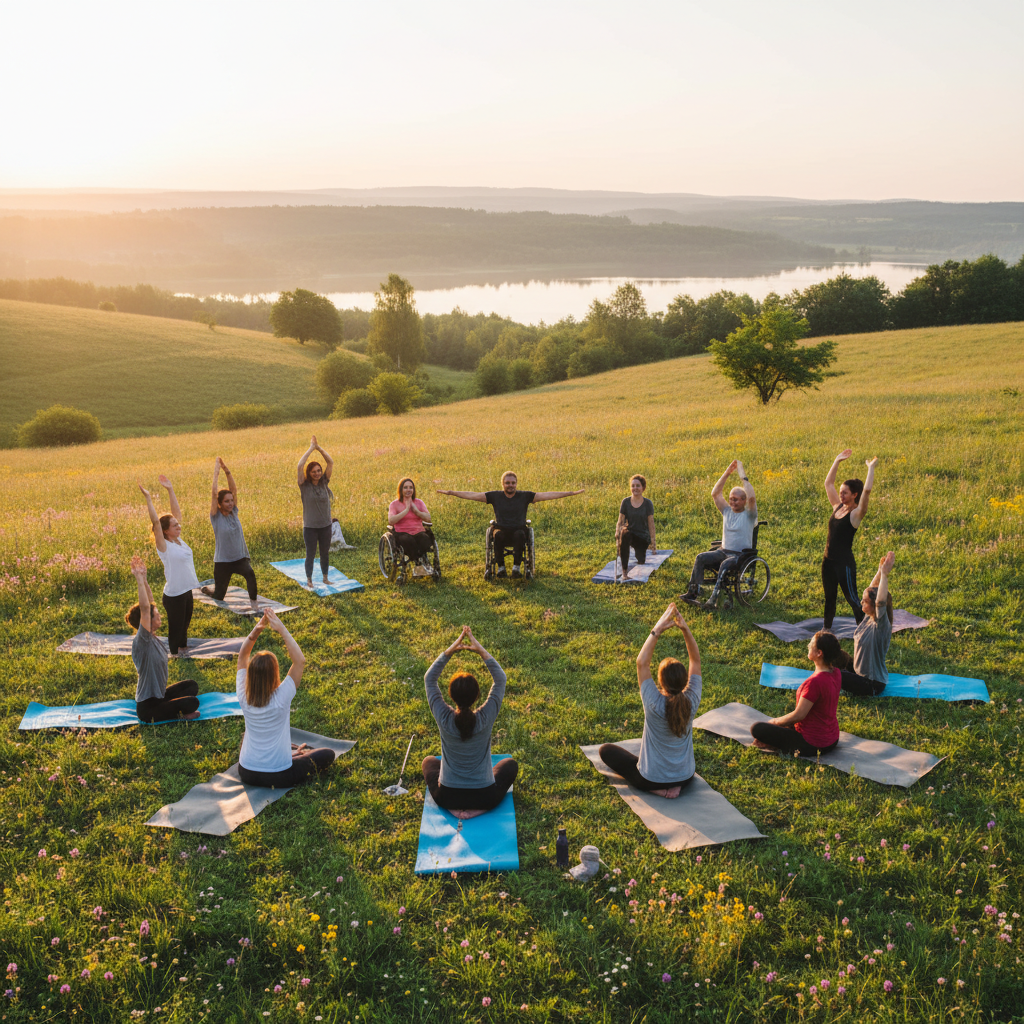
It’s inspiring to hear how a simple morning yoga routine can truly shift perspectives and improve lives. Take Sarah, a busy marketing manager who struggled with chronic back pain and morning anxiety. “I thought yoga was for super flexible people,” she shares. “But starting with just 10 minutes of gentle stretches and breathwork each morning completely changed my day. My back pain has significantly reduced, and I feel so much calmer before diving into work. It’s my non-negotiable mental prep.”
Then there’s David, a software engineer who used to wake up feeling sluggish and unmotivated. “I started doing a 15-minute flow every morning, mostly just to try something new,” he recounts. “Initially, it was hard to get out of bed, but now I crave it. I have more sustained energy, my focus at work has improved, and I just feel happier. It’s like my brain gets a warm-up too.” These stories aren’t unique; they highlight the profound yet accessible benefits that await when you commit to yourself.
Expert Tips for Elevating Your Morning Practice:
- Hydrate First: Before you even unroll your mat, drink a glass of water. Your body is dehydrated after sleep, and water helps kickstart your system and lubricate your joints. Adding lemon can give an extra boost.
- Practice Gratitude: Integrate a moment of gratitude at the beginning or end of your practice. A simple mental list of three things you’re thankful for can profoundly shift your mindset.
- Use Affirmations: As you move through poses, repeat a positive affirmation silently or aloud. Something like, “I am strong,” “I am calm,” or “I welcome this day with an open heart.”
- Connect to Nature (if possible): If you have an outdoor space, even a small balcony, consider taking your mat outside. The fresh air, natural light, and sounds of nature can amplify the calming effects of your practice.
- Listen to Your Body, Not the Instructor: While instructors (or this guide!) provide suggestions, your body is your ultimate teacher. If a pose doesn’t feel right, modify it, or skip it. No pose is worth pain or injury.
- Progress Over Perfection: Don’t get caught up in how a pose looks. Focus on how it feels. The journey of yoga is personal, not a competition.
- Consider a Journal: After your practice, spend a minute or two jotting down how you feel, any insights, or intentions for the day. This deepens your self-awareness and solidifies the benefits.
- Be Patient: Building a consistent habit and seeing significant changes takes time. Don’t get discouraged if you don’t feel like a zen master on day one. Show up, be consistent, and trust the process.
Embracing these tips can help you weave your morning yoga routine more deeply into the fabric of your life, making it not just an exercise, but a ritual of self-care and empowerment.
Conclusion
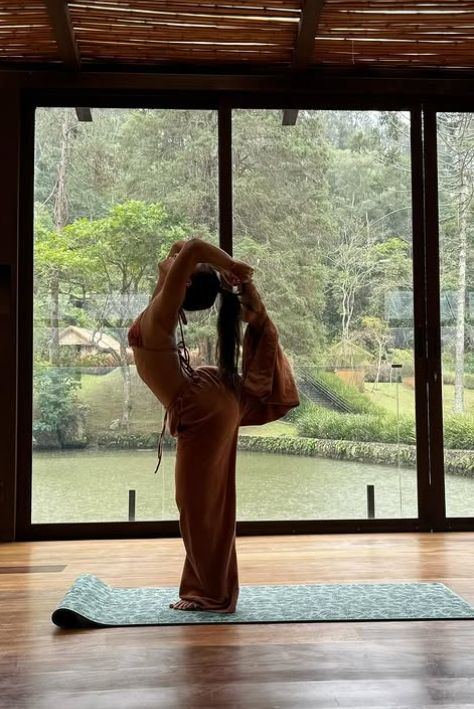

Starting your day with an easy morning yoga routine is more than just a physical workout; it’s an investment in your holistic well-being. It’s about gifting yourself a sacred space to connect, breathe, and move before the demands of the day pull you in a thousand different directions. From gently awakening stiff muscles and improving flexibility to reducing stress, boosting mental clarity, and cultivating a positive mood, the benefits are profound and far-reaching.
Remember, this isn’t about achieving complex poses or pushing your limits. It’s about finding what feels good for your body, honoring your energy levels, and building consistency over intensity. Whether you have 5 minutes or 30, the simple act of showing up on your mat can dramatically shift your entire day, helping you feel more grounded, energized, and ready to navigate whatever comes your way with grace and resilience. So, roll out your mat, take a deep breath, and allow yourself the gentle power of a morning practice. Wake up, find your vibe, and let that positive energy flow into every corner of your day.
Ready to transform your mornings? Start with one simple pose tomorrow, or dedicate just five minutes to mindful breathing. Your body and mind will thank you for it.
Frequently Asked Questions
What if I’m not flexible at all? Can I still do morning yoga?
Absolutely! Yoga is not about being flexible; it’s about becoming aware of your body and working with what you have. The easy morning routine provided focuses on gentle stretches and modifications that are accessible to all levels of flexibility. Consistency will naturally improve your range of motion over time.
How long should my morning yoga routine be to be effective?
Even 5-10 minutes of conscious movement and breathwork can be incredibly effective. The key is consistency. A short, daily practice is far more beneficial than an hour-long session once a week. If you have more time, 15-30 minutes allows for a more comprehensive flow.
Do I need any special equipment for morning yoga?
A yoga mat is recommended for cushioning and grip, but you can start with a thick towel or a carpeted floor. Props like blocks or a strap are optional and can help make poses more accessible, but they are not necessary to begin.
What’s the best time to do morning yoga?
The “best” time is simply when you can consistently do it! For most, it means shortly after waking up, before breakfast or coffee, to set a positive tone for the day. However, if a slightly later morning slot works better for your schedule, go for it.
What if I miss a day or several days? Should I give up?
Definitely not! Life happens, and missing a day (or even a week) is completely normal. The most important thing is to simply get back on your mat when you can. Don’t let a missed session turn into giving up entirely. Be kind to yourself and restart fresh.
How can I make my morning yoga routine a consistent habit?
Start small (5-10 minutes), choose a consistent time, prepare your space and gear the night before, and link it to an existing morning habit (like brushing your teeth). Remind yourself of the positive feelings and benefits you gain from the practice to build intrinsic motivation.
Can morning yoga help with stress and anxiety?
Yes, significantly! Morning yoga combines physical movement with mindful breathing and presence, which are powerful tools for calming the nervous system. Regular practice can reduce cortisol levels, improve focus, and cultivate a sense of peace, acting as a buffer against daily stressors.