





Ever stepped onto the tennis court feeling ready to conquer, only to find your game isn’t quite clicking? Sometimes, the magic isn’t just in your technique or serve; it’s in the often-overlooked details that make a massive difference. We’re talking about the gear that supports every swing, every sprint, and every victorious point. From the moment you pick up your racquet to the final celebratory fist pump, the right equipment can elevate your performance, enhance your comfort, and even help prevent injuries.
Think of it like a chef with their knives or a musician with their instrument – precision tools unlock peak potential. In tennis, these “tools” are your accessories. They aren’t just add-ons; they’re essential components that work in harmony with your skills to give you an edge. In this comprehensive guide, we’re going to dive deep into 5 essential tennis accessories that no serious player, regardless of skill level, should overlook. We’ll break down why each item is crucial, what to look for, and how choosing wisely can truly ace your game. Get ready to transform your court experience from good to absolutely phenomenal!
1. The Right Tennis Racquet – Your Primary Weapon
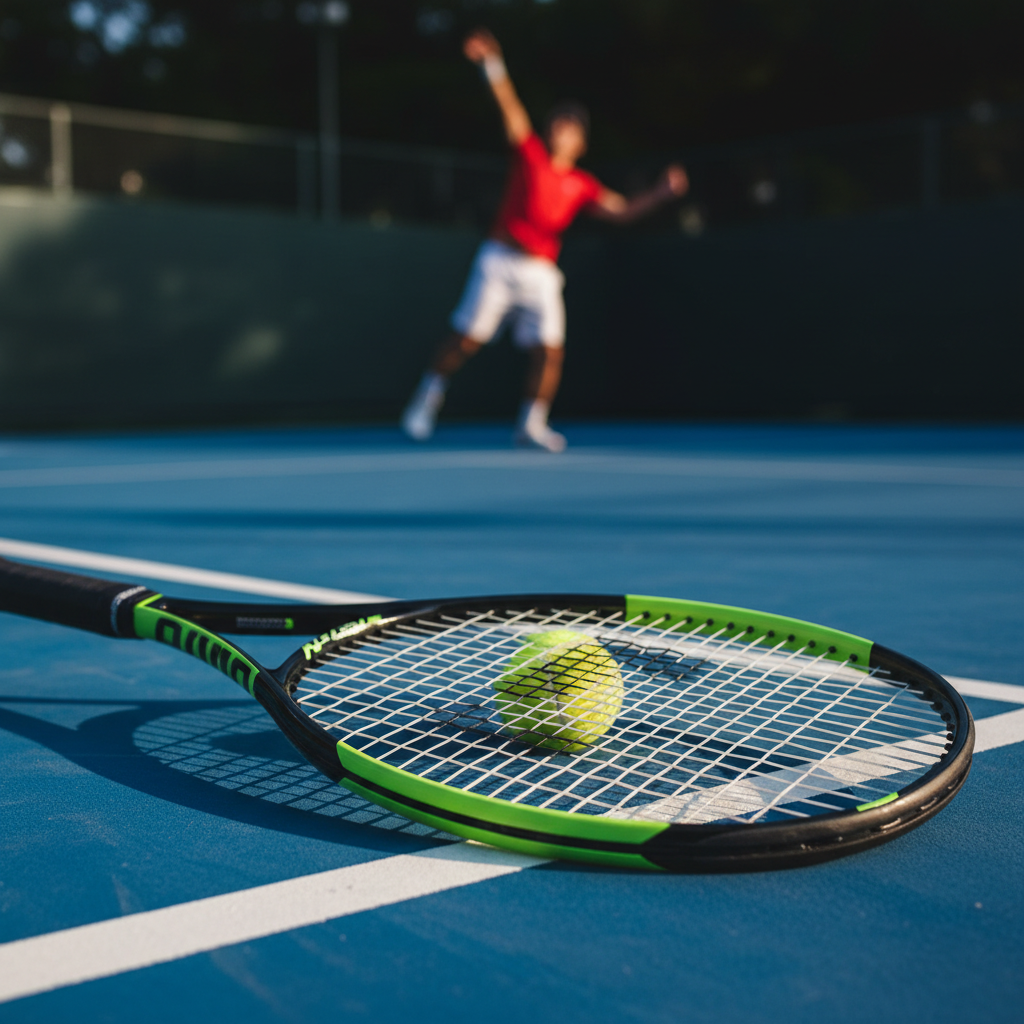
Let’s kick things off with the most obvious, yet often misunderstood, accessory: your tennis racquet. Calling it an “accessory” almost feels reductive because it’s truly an extension of your arm, your power, and your precision. Yet, many players, especially beginners, grab any old racquet, not realizing the profound impact a well-suited frame can have on their game. Choosing the right racquet isn’t just about aesthetics; it’s a strategic decision that influences everything from your serve speed to your volley control.
Understanding Racquet Anatomy and Your Play Style
Tennis racquets are complex pieces of engineering, designed with specific player types and playing styles in mind. Ignoring these nuances is like trying to drive a Formula 1 car with bicycle tires – you just won’t get the optimal performance. Here’s what to consider:
- Head Size: Measured in square inches, head size impacts power and forgiveness.
- Oversize (105 sq. in. and up): Offers a larger sweet spot, more power, and more forgiveness on off-center hits. Ideal for beginners, those with shorter swings, or players looking for easy power.
- Midplus (95-104 sq. in.): The most common head size, offering a good balance of power and control. Great for intermediate to advanced players with moderate swing speeds.
- Midsize (under 95 sq. in.): Smaller sweet spot, less power but superior control and feel. Preferred by advanced players with long, fast swings who can consistently hit the sweet spot.
- Weight: Racquet weight significantly influences stability, power, and maneuverability.
- Light (under 10.5 oz unstrung): Easier to swing, good for faster racquet head speed, leading to more spin. Ideal for beginners, junior players, or those seeking quicker reactions at the net.
- Medium (10.5-11.5 oz unstrung): A popular range offering a balance of power, stability, and maneuverability. Suits most intermediate to advanced players.
- Heavy (over 11.5 oz unstrung): Provides maximum power and stability, especially against fast-paced shots. Can reduce vibration. Best for strong, advanced players with well-developed strokes.
- Balance: This refers to how the racquet’s weight is distributed.
- Head-light: Most of the weight is towards the handle. Offers better maneuverability, making it easier to swing fast for spin and quick volleys. Common in player-oriented racquets.
- Head-heavy: Most of the weight is towards the head. Provides more power and stability on groundstrokes, but can feel slower to swing. Often found in game-improvement racquets.
- Grip Size: Crucial for comfort, control, and injury prevention. A grip that’s too small requires more muscle effort to hold, potentially leading to tennis elbow. One that’s too large limits wrist movement and makes it hard to generate spin.
- Measure your grip size by holding a racquet; you should be able to slide the index finger of your non-hitting hand into the gap between your ring finger and palm.
- String Pattern: The density of the strings (e.g., 16×19, 18×20).
- Open patterns (e.g., 16×19): Fewer strings, more space between them. Allows for more string movement, generating more power and spin. Less durable for strings.
- Dense patterns (e.g., 18×20): More strings, less space. Offers greater control, feel, and string durability. Requires more effort to generate power and spin.
The Benefits of a Personalized Racquet
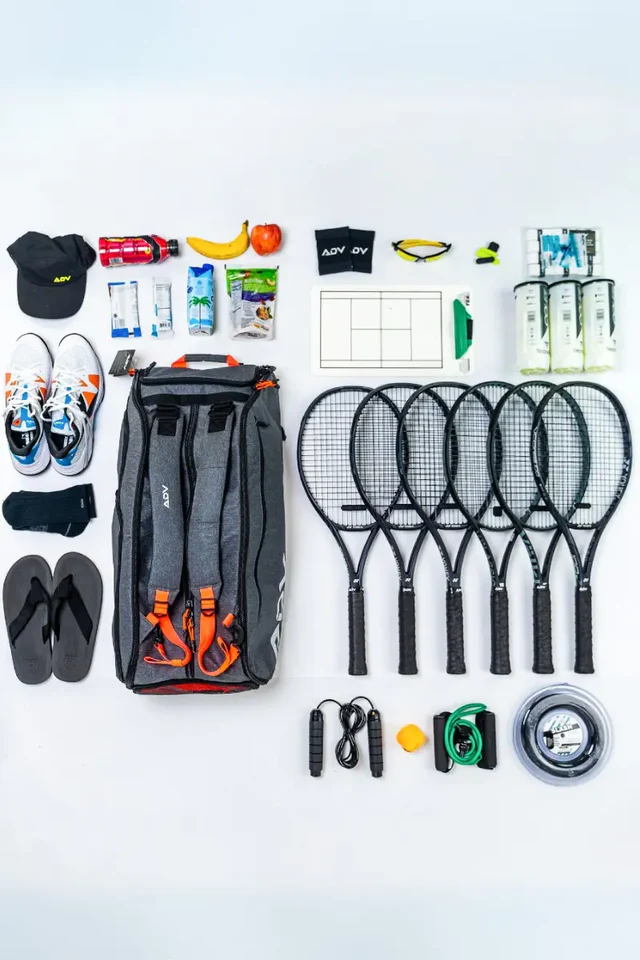
Investing time in selecting the perfect racquet pays dividends. A racquet tailored to your physical attributes and playing style will:
- Boost power and control: The right combination of head size, weight, and balance can optimize your shot-making.
- Enhance comfort and reduce fatigue: A suitable grip size and overall weight minimize strain on your arm and wrist.
- Prevent injuries: Incorrect racquet specs can lead to common tennis ailments like tennis elbow or wrist strain.
- Improve confidence: Knowing your equipment supports your game can significantly uplift your mental approach on court.
Don’t rush this decision. Demo several racquets from a specialized tennis store. Hit some balls, serve, volley, and see how each feels. It’s an investment in your game that will truly pay off.
2. Premium Tennis Strings – The Heart of Your Racquet
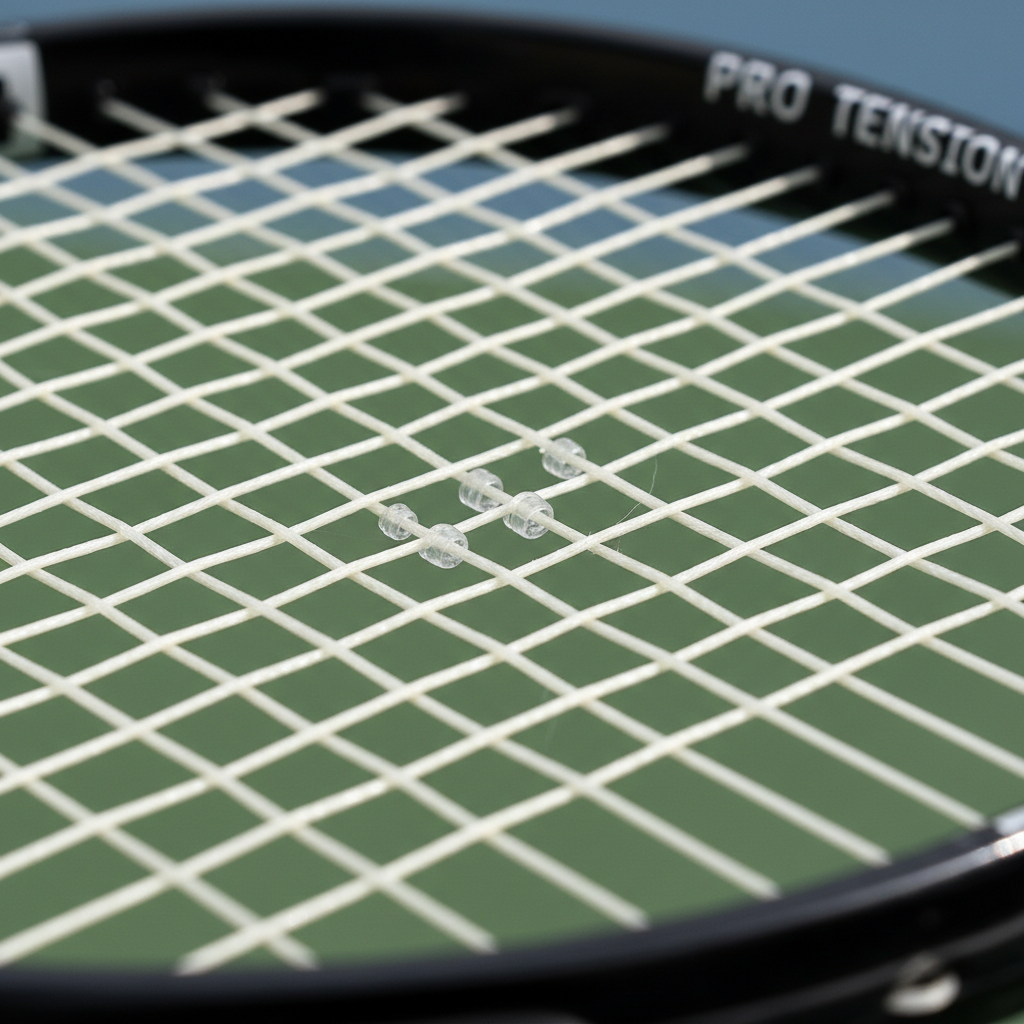
While the racquet frame is undoubtedly your primary weapon, the strings are the “engine” that drives the ball. Often overlooked, or simply strung with whatever comes standard, your choice of tennis strings profoundly affects power, control, spin, comfort, and durability. Imagine putting cheap, worn-out tires on a high-performance sports car; you wouldn’t get the intended experience. The same goes for strings in your racquet. They are the only part of your equipment that actually makes contact with the ball, making them incredibly important for optimizing every shot.
Deciphering the String Landscape
The world of tennis strings is vast, offering an array of materials, gauges, and tensions. Understanding these options is key to unlocking your racquet’s full potential and tailoring it to your unique game.
- Types of String Materials:
- Natural Gut: The “gold standard” for feel, power, and comfort. Made from serosa of cattle intestine, it offers exceptional elasticity, holding tension well. It’s also the most expensive and least durable, especially in humid conditions. Ideal for players seeking maximum feel and arm comfort, often professionals.
- Synthetic Gut: A popular all-around string, usually made of nylon. It’s an affordable, durable, and comfortable option that provides a good balance of power and control. Great for beginners and intermediate players looking for a solid performing string without breaking the bank.
- Polyester (Poly): Known for its exceptional control and spin potential, due to its stiff, slippery nature that allows strings to snap back into place. Favored by advanced players with fast, powerful swings who generate their own power. Can be harsh on the arm if not used by strong players, and loses tension quickly.
- Multifilament: Designed to mimic the feel of natural gut, made from thousands of microfibers. Offers excellent comfort, good power, and decent feel. A great choice for players seeking arm-friendly options or those who want more comfort than poly but more durability than natural gut.
- Hybrid: A combination of two different string types, usually a polyester string in the mains (for control/spin) and a multifilament or synthetic gut in the crosses (for comfort/power). This allows players to customize their string bed, blending the best qualities of each type.
- String Gauge: This refers to the thickness of the string. Lower numbers mean thicker strings.
- Thicker gauges (e.g., 15, 16): More durable, offer more control, and less power.
- Thinner gauges (e.g., 17, 18): Less durable, offer more power and feel, and more spin potential as they bite into the ball more effectively.
- String Tension: How tightly the strings are pulled. This is measured in pounds (lbs) or kilograms (kg).
- Higher tension: More control, less power, less depth. The string bed is stiffer, leading to a smaller sweet spot and less rebound. Good for players who generate their own power and prioritize precision.
- Lower tension: More power, less control, more depth. The string bed is more elastic, offering a larger sweet spot and a trampoline effect. Good for players seeking easy power and depth.
When to Restring and Why it Matters
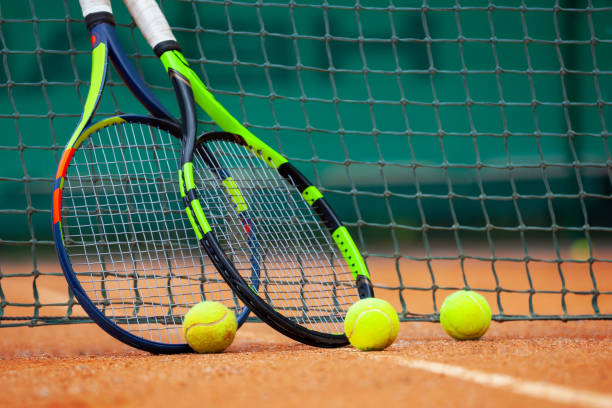
Strings don’t last forever, even if they don’t break. Over time, strings lose tension and elasticity, becoming “dead.” This means they’ll provide less power, less control, and less spin, even if they look perfectly fine.
- General Rule of Thumb: Restring as many times per year as you play per week. So, if you play 3 times a week, restring 3 times a year.
- Polyester Strings: These lose tension faster than others. Players using poly should consider restringing every 20-30 hours of play, or even more frequently for competitive players.
- Signs you need a restring:
- Lack of power or feel you used to have.
- Reduced spin potential.
- The ball flies long more often than usual.
- Visible notching or fraying of the strings.
Choosing the right string and maintaining it properly is a game-changer. It’s a nuanced decision that can significantly improve your shot-making consistency and enjoyment on the court. Don’t let your strings be an afterthought; make them a priority.
3. Comfortable Tennis Shoes – Your Foundation on the Court
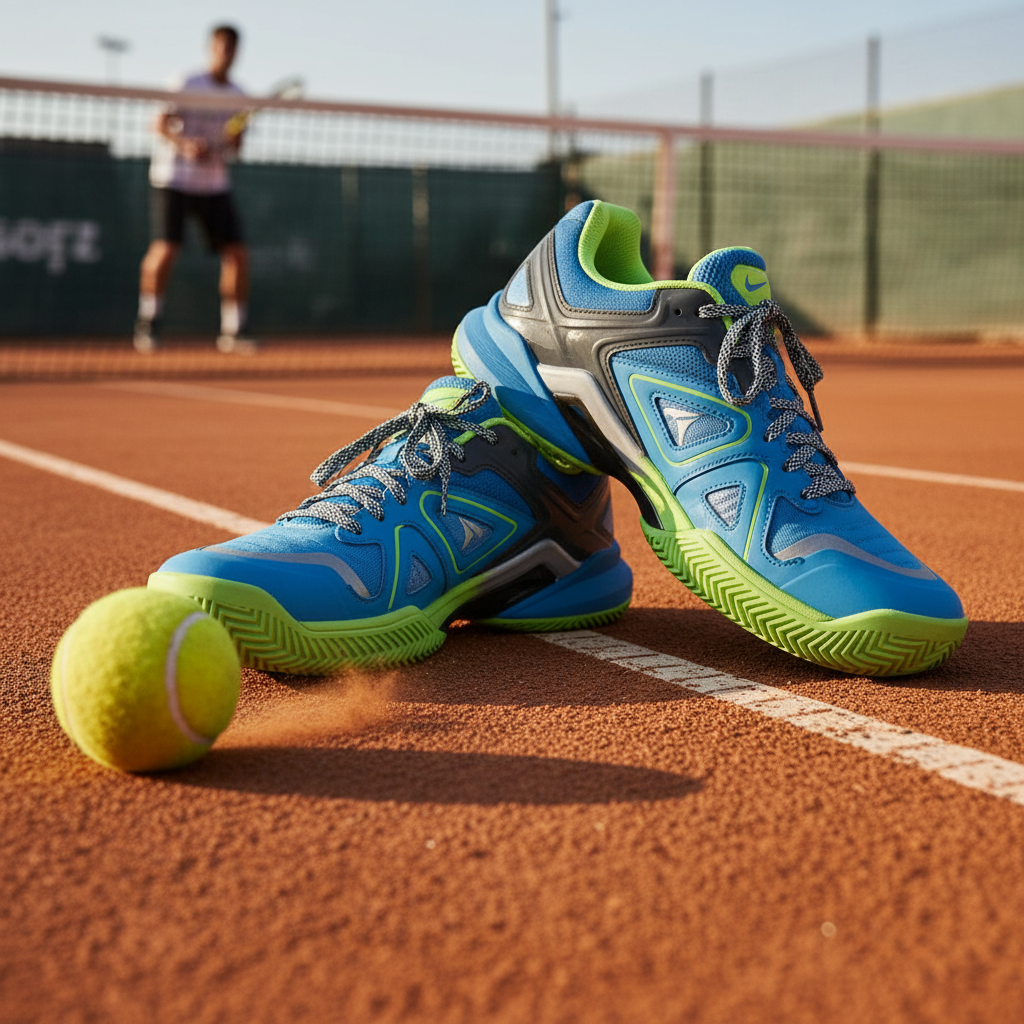
You wouldn’t run a marathon in hiking boots, right? Similarly, playing tennis in regular running shoes or casual trainers is a recipe for disaster – or at least, a sub-optimal performance and potential injury. Tennis is a sport of explosive, multi-directional movement: quick sprints, sudden stops, lateral shuffles, and powerful pivots. Your feet and ankles bear the brunt of this high-impact action, making specialized tennis shoes not just an accessory, but an absolute necessity for anyone serious about the game. They are your foundation, providing the stability, support, and traction needed for every dynamic maneuver.
Key Features of Superior Tennis Shoes
Unlike running shoes, which are designed for linear forward motion and cushioning, tennis shoes are engineered to withstand the unique demands of the court. Here’s what sets them apart:
- Lateral Support: This is perhaps the most critical distinction. Tennis shoes feature reinforced uppers and sturdy side walls to prevent your foot from rolling during aggressive lateral movements. This support is crucial for quick changes in direction, lunges, and side-to-side shuffles, significantly reducing the risk of ankle sprains.
- Analogy: Think of it like a seatbelt for your foot, keeping it securely in place even during sharp turns.
- Court-Specific Outsoles: The tread pattern and rubber compound of a tennis shoe outsole are designed to grip various court surfaces while also allowing for controlled sliding when needed.
- Hard Court Shoes: Typically have a durable, non-marking outsole with a modified herringbone pattern, offering a good balance of grip and durability. Many come with a durability guarantee for aggressive players.
- Clay Court Shoes: Feature a full herringbone pattern that prevents clay from getting stuck in the treads, allowing for consistent grip. The pattern also facilitates controlled sliding into shots, a common technique on clay.
- Grass Court Shoes: Have a dimpled or “nubbed” outsole to provide maximum grip on slippery grass, resembling golf spikes but much shorter. Not suitable for other court types.
- All-Court Shoes: A versatile option with a tread pattern designed for reasonable performance on all surfaces, though not specializing in any one. Good for recreational players who play on various courts.
- Cushioning and Shock Absorption: While different from running shoes, tennis shoes still offer substantial cushioning, especially in the heel and forefoot, to absorb the impact of jumps, landings, and constant foot pounding. This protects your joints (knees, hips, spine) and reduces fatigue during long matches.
- Durability: Tennis shoes are built to last against the abrasive forces of court surfaces and repetitive, aggressive movements. Reinforced toe caps (for toe-draggers during serves) and high-abrasion rubber compounds are common features.
The Consequences of Sub-Par Footwear

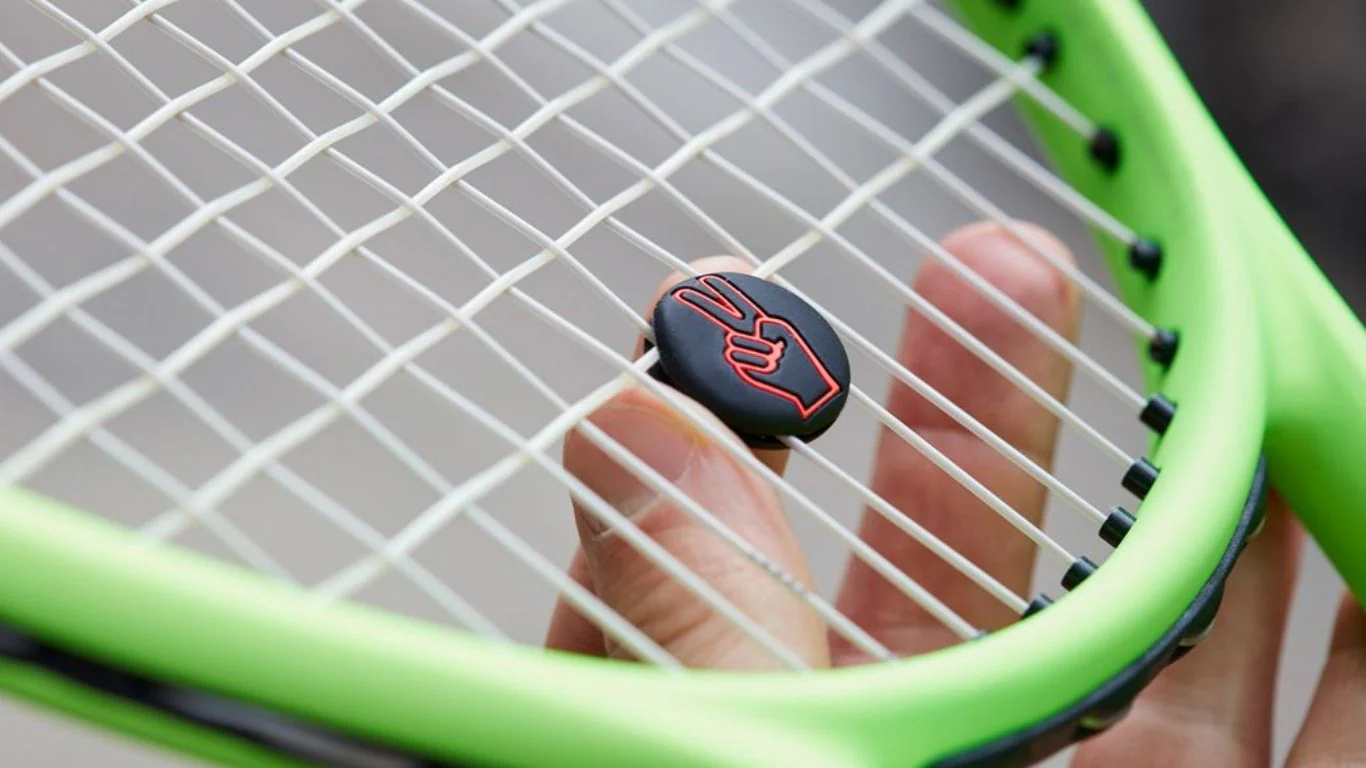
Wearing the wrong shoes on the court isn’t just uncomfortable; it can be detrimental to your game and your health.
- Increased Risk of Injury: Ankle sprains, knee pain, shin splints, and even foot fractures are more likely with shoes that lack adequate lateral support and cushioning. Running shoes, for example, are designed to flex forward and often have elevated heels, making them unstable for side-to-side movements.
- Reduced Performance: Without proper grip, you’ll slip and slide, losing precious milliseconds and energy. Poor support means less confidence in your movements, potentially slowing you down or forcing you to hold back.
- Fatigue: Inadequate cushioning and support lead to quicker muscle fatigue in your feet and legs, impacting your stamina and focus during long rallies.
- Blisters and Discomfort: Shoes not designed for tennis movements can cause friction points, leading to painful blisters and general discomfort, distracting you from the game.
Choosing the right tennis shoes is as crucial as picking the right racquet. Visit a specialized tennis store, try on several pairs, and move around in them. Jump, shuffle, and feel the support. Your feet, and your game, will thank you for it.
4. Vibration Dampener – For Feel and Comfort
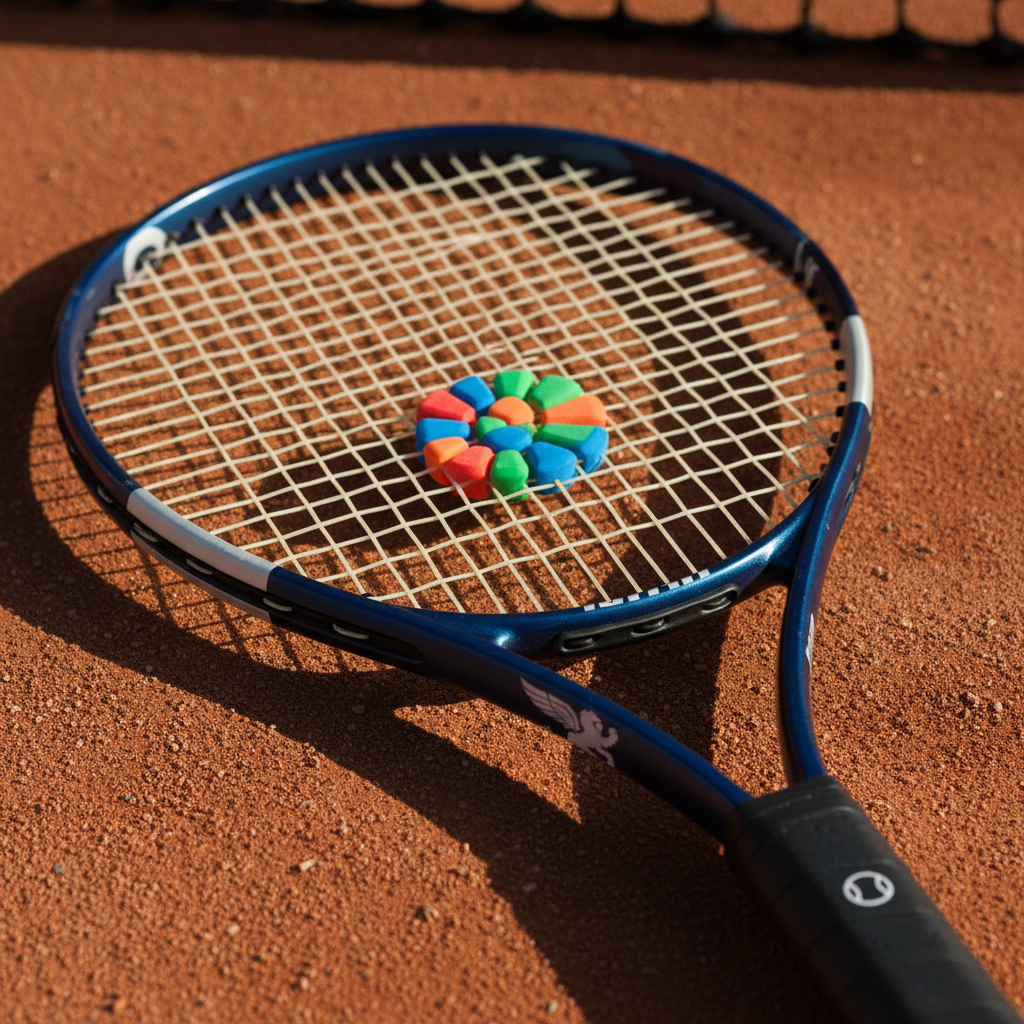
Ever heard that distinctive “ping” sound when you strike a tennis ball with a racquet? While some players love it, others find the accompanying vibration unsettling, even causing discomfort in the arm. This is where the humble vibration dampener comes into play. A small, often overlooked accessory, the dampener is designed to absorb or reduce the residual vibrations that travel up the racquet frame to your arm after impact. While its impact on actual performance is a hotly debated topic among players, its contribution to comfort and feel is undeniable for many.
What a Dampener Does (and Doesn’t Do)
Let’s clarify the purpose of a vibration dampener, as there are some common misconceptions:
- Reduces Unwanted Vibrations: When you hit the ball, the strings and frame vibrate. Some of these vibrations are low-frequency, felt more as a “thud” or “buzz” in your hand and arm. A dampener’s primary job is to lessen these specific vibrations.
- Changes Sound: This is perhaps the most noticeable effect for many players. A dampener often transforms the sharp “ping” of a strung racquet into a duller “thud.” For some, this change in auditory feedback improves the perceived “feel” of the shot.
- Does NOT Significantly Impact Power or Control: This is where the debate often arises. Most scientific studies and expert opinions suggest that dampeners have minimal to no measurable effect on the power or control of a shot. The amount of energy absorbed by the dampener is tiny compared to the energy involved in ball impact.
Types of Dampeners and Placement
Dampeners generally come in two main forms:
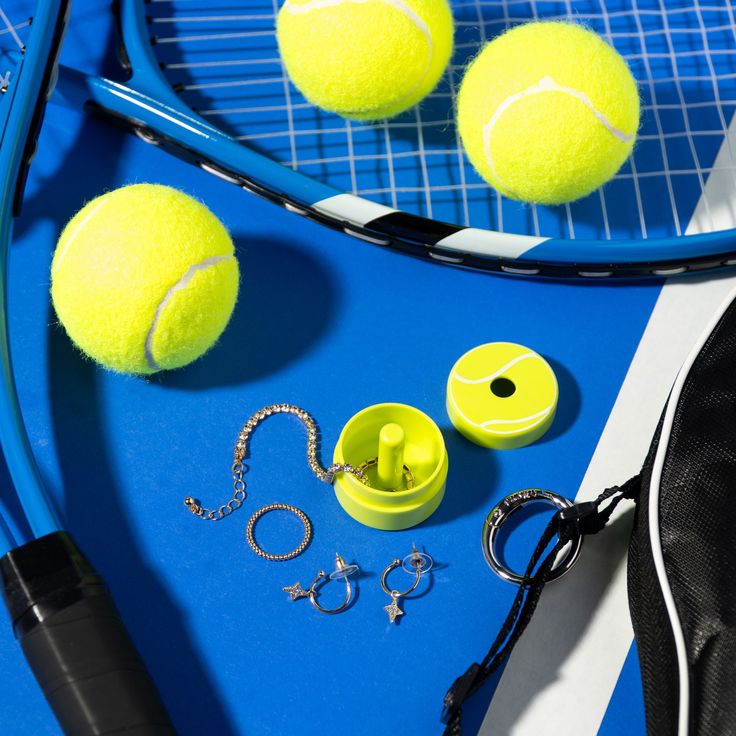
- Button Dampeners: These are small, circular or themed shapes that fit between two strings, typically near the throat of the racquet. They are the most common type and are easy to install and remove.
- Worm Dampeners: These are longer, tubular dampeners that weave through multiple strings at the bottom of the string bed. They tend to dampen more vibrations due to their larger contact area with the strings.
Placement: According to official tennis rules, dampeners must be placed outside the pattern of the crossed strings, meaning below the lowest cross string. The most common spot is just above the throat of the racquet, where the main strings converge.
Who Benefits Most?

While not everyone uses a dampener (many pros like Rafael Nadal use them, while others like Roger Federer often don’t), certain players tend to find them more beneficial:
- Players with Arm Issues: If you suffer from tennis elbow, wrist pain, or general arm fatigue, a dampener can often provide a noticeable reduction in the “shock” felt upon impact, leading to greater comfort.
- Players Sensitive to Vibration: Some players are simply more sensitive to the natural vibrations of a racquet and find them distracting or uncomfortable.
- Players Who Prefer a Specific Feel/Sound: As mentioned, the altered sound and feel can be a psychological boost for some, making them feel more connected to the ball.
- Beginners: Novice players are often more susceptible to feeling harsh vibrations and may find a dampener helps make the game more enjoyable.
Ultimately, whether to use a vibration dampener is a matter of personal preference. It’s an inexpensive accessory that can significantly enhance your comfort on the court, potentially allowing you to play longer and with less strain. Give a few different types a try and see if it makes a positive difference for your game.
5. Overgrips and Replacement Grips – Your Connection to the Racquet
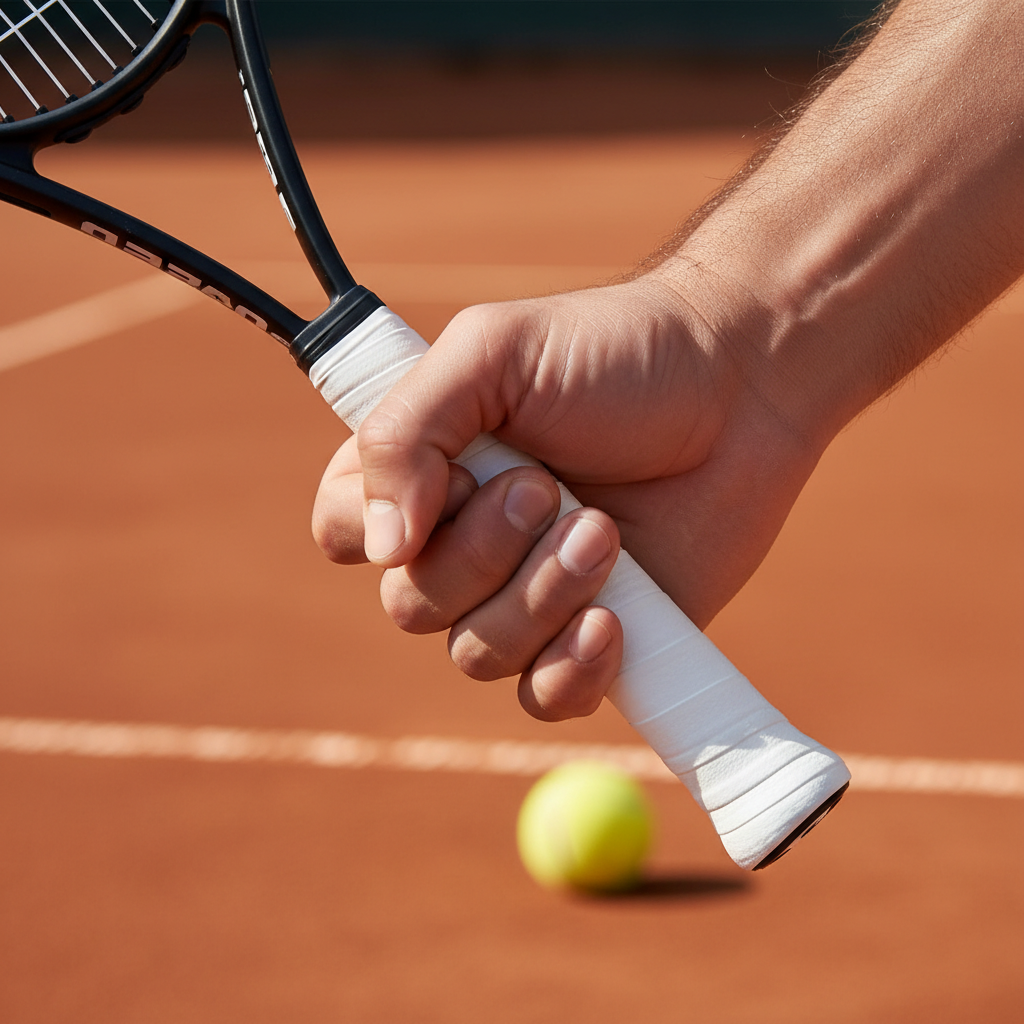
Your hands are your direct link to your racquet, and a solid, comfortable grip is paramount for control, feel, and preventing slippage. Over time, sweat, dirt, and repetitive use degrade the original grip on your racquet, leading to a loss of tackiness and absorbency. This is where overgrips and replacement grips become indispensable. They are more than just cosmetic additions; they are crucial components that maintain your connection to the racquet, directly impacting your ability to generate spin, power, and precise shots, all while keeping your hands comfortable and blister-free.
Understanding the Difference: Replacement vs. Overgrip
It’s important to distinguish between these two types of grips, as they serve different purposes:
- Replacement Grips (Base Grips): This is the original grip that comes pre-wrapped on your racquet from the factory. It’s usually thicker, more cushioned, and directly adheres to the racquet handle. Its primary function is to provide the foundational grip, offering cushioning and a specific grip size.
- When to replace: A replacement grip should be changed when it wears thin, becomes smooth, or loses its cushioning properties. This is typically less frequent than changing an overgrip, perhaps once or twice a year depending on play frequency.
- Material: Often made of synthetic materials with some form of cushioning and a slightly tacky or absorbent surface.
- Overgrips: These are thin, disposable wraps that are applied over a replacement grip. They are much thinner and less expensive than replacement grips. Their main roles are to enhance tackiness or absorbency, provide a slight increase in grip size, and protect the underlying replacement grip.
- When to replace: Overgrips should be replaced much more frequently – sometimes after every few hours of play, or at least every couple of weeks for regular players. Signs include loss of tackiness, slipperiness due to sweat saturation, or visible wear.
- Material: Available in various materials:
- Tacky overgrips: Offer a sticky feel for maximum grip security, ideal for players who want a firm hold.
- Absorbent overgrips: Designed to wick away sweat, keeping your hands dry and preventing slippage in humid conditions or for players with sweaty palms.
- Smooth overgrips: Offer a more natural, less aggressive feel.
Why a Fresh Grip is a Game-Changer

Neglecting your grips can have significant negative consequences on your game:
- Loss of Control and Feel: A worn, slippery grip compromises your ability to hold the racquet securely. This leads to reduced control over your shots, making it harder to place the ball accurately or generate consistent spin. You might unconsciously squeeze the racquet tighter, leading to forearm fatigue.
- Reduced Power and Spin: A secure grip allows you to relax your hand and arm, facilitating a faster, more fluid swing. When your grip is slipping, you can’t transfer power efficiently, and your ability to “snap” the wrist for spin is diminished.
- Blisters and Calluses: A compromised grip can cause excessive friction between your hand and the handle, leading to painful blisters or calluses that can severely impact your play.
- Increased Risk of Injury: Constantly fighting a slippery grip can lead to overgripping and tension in your arm, potentially contributing to tennis elbow or wrist strain. A firm, comfortable grip allows for proper technique and reduces undue stress.
- Psychological Impact: A fresh, comfortable grip instills confidence. Knowing you have a secure connection to your racquet allows you to focus purely on the ball and your technique, rather than worrying about the racquet twisting in your hand.
Choosing and Applying Grips
- For Replacement Grips: If your existing grip is severely worn or you want to change the foundational cushioning, invest in a new replacement grip. Many brands offer different thicknesses and levels of cushioning.
- For Overgrips: Experiment with different types (tacky vs. absorbent) to find what suits your climate and sweat levels best. Buy them in multi-packs, as you’ll be replacing them often.
- Application: Both types of grips come with an adhesive start and a finishing tape. Watch a quick online tutorial if you’re unsure how to wrap them neatly. A well-wrapped grip feels much better than a haphazard one.
Don’t underestimate the power of a fresh grip. It’s a small, inexpensive detail that can have a massive impact on your comfort, confidence, and overall performance on the tennis court. Keep those connections fresh, and your game will follow suit.
Conclusion

Stepping onto the tennis court with the right gear isn’t just about looking the part; it’s about empowering your performance, protecting your body, and truly enjoying every moment of the game. We’ve journeyed through the 5 essential tennis accessories that act as your silent partners, each playing a critical role in optimizing your potential.
From the perfectly weighted and balanced racquet that extends your arm’s reach and power, to the strategic string choice that dictates your ball’s spin and control, every piece matters. Your specialized tennis shoes are the foundation of every explosive movement, safeguarding your joints and propelling you across the court with confidence. The subtle magic of a vibration dampener can transform discomfort into focused feel, while a fresh overgrip ensures an unshakeable connection, translating every nuance of your hand into precision shots.
These aren’t just mere add-ons; they are investments in your passion, your health, and your on-court success. Equipping yourself properly isn’t a luxury; it’s a fundamental step towards acing your game, pushing your limits, and finding that extra edge when the match hangs in the balance. So, take the time to evaluate your current gear, consider these essential accessories, and make choices that will truly elevate your tennis journey. Your best game is waiting.
Are you ready to transform your game? Start by assessing your current equipment and consider upgrading one of these essential accessories. Visit your local tennis specialist store, demo a new racquet, try on some shoes, or experiment with different string and grip setups. The court is calling, and with the right gear, you’ll be ready to answer with confidence and power!
Frequently Asked Questions

1. How often should I replace my tennis racquet?
There’s no strict rule, as it depends on how often you play and how well you care for your racquet. Generally, an advanced player playing several times a week might consider replacing their racquet every 1-2 years due to frame fatigue. Recreational players might get 3-5 years out of a racquet. Look for signs like cracks, loss of power, or a noticeable change in feel.
2. What’s the biggest mistake players make with their strings?
The most common mistake is not restringing often enough, even if the strings haven’t broken. Strings lose tension and elasticity over time, becoming “dead” and offering less power, control, and spin. A good rule of thumb is to restring as many times per year as you play per week (e.g., play 3 times a week, restring 3 times a year).
3. Can I use running shoes for tennis?
It’s highly discouraged. Running shoes are designed for linear forward motion and cushioning, lacking the lateral support and durable outsoles required for tennis. Using them increases your risk of ankle sprains, knee injuries, and can lead to faster fatigue and reduced performance due to poor grip and stability during quick, multi-directional movements.
4. Does a vibration dampener actually improve my game?
Most experts agree that a vibration dampener has minimal to no measurable impact on the power or control of your shots. Its primary function is to reduce harsh vibrations, which can increase comfort and change the sound of ball impact. For players with arm discomfort or those who prefer a specific feel, it can make the game more enjoyable.
5. How do I know if my grip is too old or worn out?
You’ll notice your grip losing its tackiness, becoming smooth, or feeling slippery, especially when your hands get sweaty. This leads to less control, increased hand fatigue, and potentially blisters. For overgrips, replace them every few hours of play or at least every couple of weeks for regular players. Replacement grips (underneath) last much longer but should be changed if they’ve lost their cushioning or become severely worn.
6. Should I choose a tacky or absorbent overgrip?
This depends on your personal preference and how much you sweat. If your hands get very sweaty or you play in humid conditions, an absorbent overgrip will help wick away moisture. If you prefer a very secure, sticky feel and don’t have excessively sweaty palms, a tacky overgrip might be better. Experiment to find what works best for you.