




The alarm goes off. You’re immediately hit with a mental checklist: work deadlines, family commitments, and an endless stream of errands. For the modern adult, life isn’t just busy; it’s a relentless marathon. If you’ve ever thought, “I don’t have enough time to be fit,” you are in good company. This common belief often acts as the biggest barrier to a healthier lifestyle. The great news? Achieving and maintaining excellent fitness doesn’t require hours in the gym. It requires smart, time-efficient strategies. This comprehensive guide will show you how to redesign your approach, proving that you can reach your health goals even with the most packed schedule.
Understanding the “Busy Adult” Challenge

The Modern Time Crunch
Why is fitness such a struggle for the busy adult? A demanding work culture, the constant pull of digital devices, and the necessary juggle of personal responsibilities have created a profound time management deficit. The vast majority of people spend their workdays in a sedentary lifestyle, drastically reducing the natural movement our bodies crave. We often feel too drained by the end of the day to even consider exercise. This fatigue is real, but it’s not a reason to quit; it’s a reason to get smarter about how and when we move.
The Myth of the Long Workout
One of the biggest roadblocks is the ingrained notion that fitness requires long, uninterrupted sessions—a full hour of cardio followed by forty-five minutes of strength training. This is a pervasive workout myth. In fact, research, backed by sports physiologists, increasingly shows that the quality and intensity of your movement matter far more than the duration. We can effectively train the body and achieve significant results in short, high-impact periods. This opens the door to powerful strategies like “fitness snacking” and highly condensed training methods.
Optimizing Your Fitness Strategy: The Time-Saving Principles



To succeed as a busy adult, you must move beyond hoping to “find” time. You must create it by applying a few core, time-saving principles.
The Power of Prioritization and Scheduling
You wouldn’t cancel a crucial work meeting because you felt “too busy.” You need to treat your workout prioritization the same way. Fitness sessions must become non-negotiable appointments on your calendar. This simple shift in mindset is foundational.
Here are actionable tips for integrating fitness into a busy calendar:
- Implement the “First Thing” Rule: Schedule your workout first thing in the morning before emails, family, or other commitments can derail you. It gives you an energy boost for the whole day.
- Utilize the Lunch-Time Blitz: If mornings are impossible, reclaim your lunch break. Even thirty minutes of brisk activity or a fast-paced circuit can be incredibly effective.
- Bundle and Stack: Combine an existing commitment with exercise. For example, listen to a podcast or an audiobook only while you are walking or lifting weights.
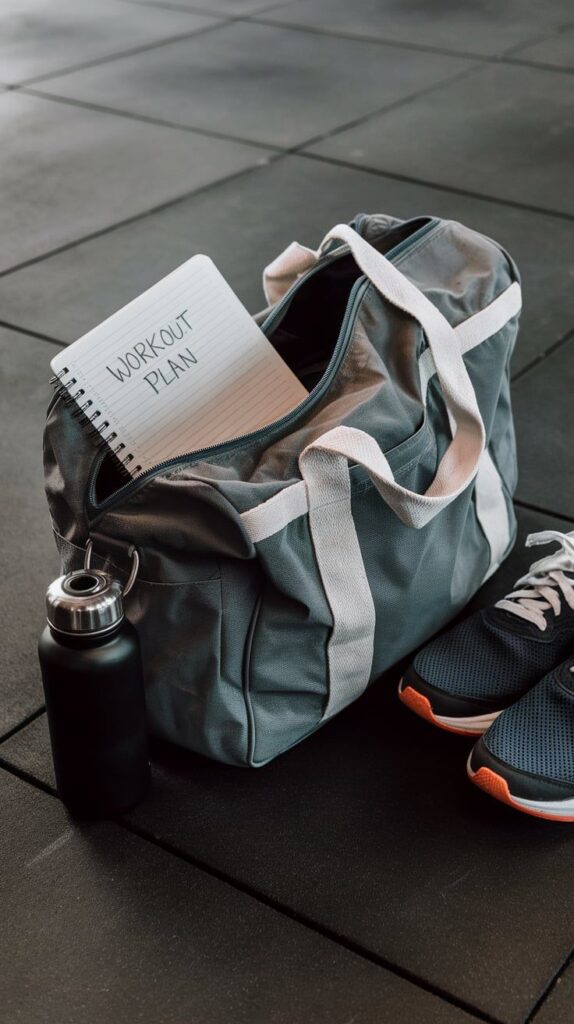
- Plan the Night Before: Lay out your workout clothes and pack your gym bag before you go to sleep. Removing these small obstacles eliminates morning decision fatigue.
Maximizing Efficiency: The Compound Movement Advantage
When time is short, you cannot afford to waste minutes isolating small muscles. The most efficient use of your energy is through compound exercises. These are movements that engage multiple joints and large muscle groups simultaneously. They burn more calories, build more functional strength, and, crucially, save you significant time.
Focus on the “Big Five” full-body workout movements:
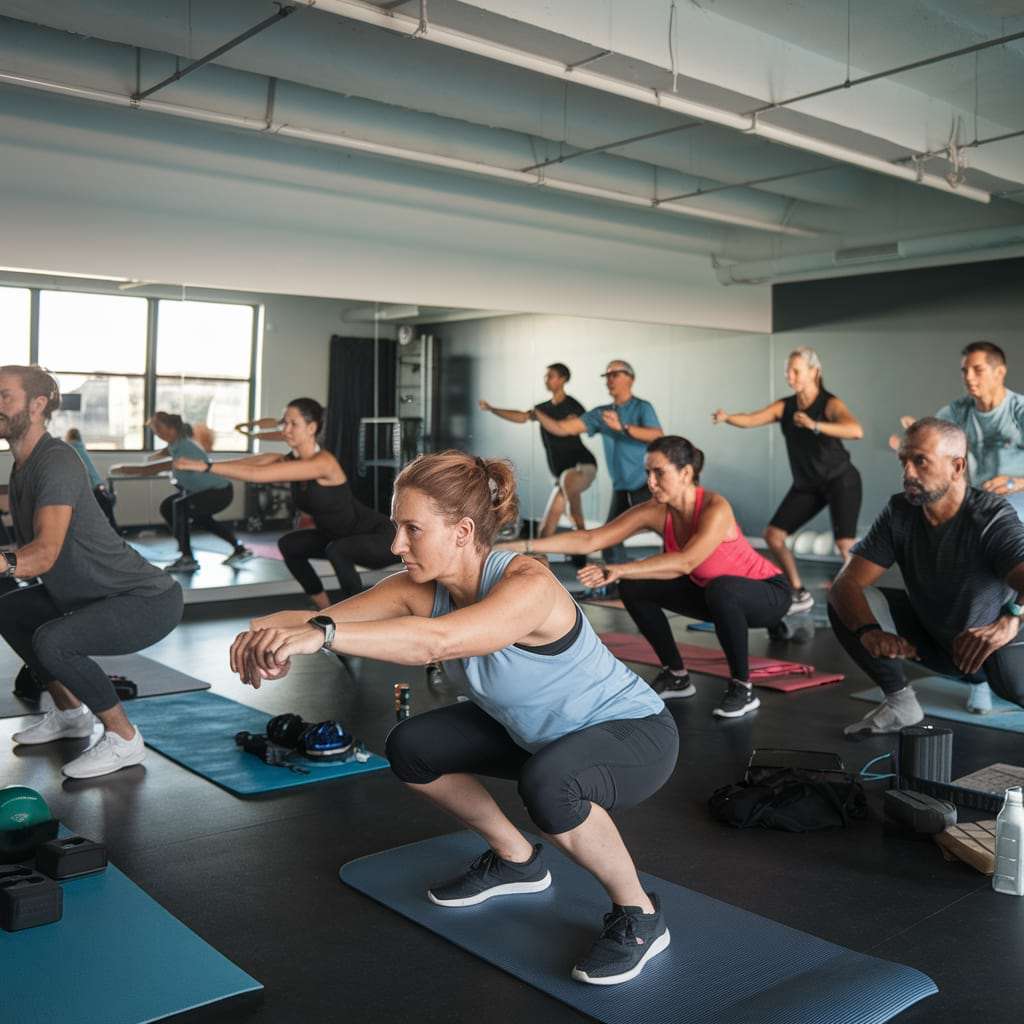
- Squats: Work the quads, hamstrings, glutes, and core.
- Deadlifts: Engage the entire posterior chain (hamstrings, glutes, back).
- Push-ups: Work the chest, shoulders, and triceps, while stabilizing the core.
- Rows: Target the back, biceps, and shoulders—balancing the pushing muscles.
- Overhead Press: Hits the shoulders, triceps, and upper back.
By prioritizing these, you can train your entire body in a condensed period, moving swiftly from one exercise to the next with minimal rest.
Time-Efficient Workout Regimes for Max Results

The secret to success is intensity. When you can’t train for quantity, you must train for quality.
High-Intensity Interval Training (HIIT): The Powerhouse
HIIT workouts are the busy adult’s best friend. This method involves short bursts of near-maximal effort followed by brief periods of rest or low-intensity activity. It’s effective because it provides a powerful cardiovascular and metabolic punch in a fraction of the time required for traditional steady-state cardio.
The science behind HIIT is compelling. This type of training triggers the EPOC effect (Excess Post-exercise Oxygen Consumption), also known as the “afterburn.” This means your body continues to burn calories at an elevated rate long after your workout is finished—a phenomenal return on a minimal time investment.
An effective example of a time-efficient workout could look like this:
- A brief warm-up, moving the joints and increasing the heart rate.
- Four rounds of work: perform an exercise (like burpees, high knees, or mountain climbers) for a set duration, followed by a short rest.
- Repeat this sequence using four to six different exercises.
- A final cool-down to stretch and slow the heart rate.
This method delivers powerful results in under twenty minutes, a time slot almost anyone can find.
Strength Training Circuits: Full-Body in Minutes



For building and maintaining muscle, strength training circuits offer unbeatable efficiency. The goal is to minimize rest time and keep your heart rate elevated by moving quickly between exercises.
You can structure a fast-paced strength session using supersets or circuits. A superset involves performing two exercises back-to-back with no rest in between. For instance, you could pair an upper-body push (like a bench press or push-up) immediately with a lower-body exercise (like a squat). While your chest recovers from the push, your legs are working, and vice-versa.
A brief case study: One executive client of a top fitness coach switched from spending an hour on individual muscle groups to performing three twenty-minute circuits per week. By focusing on compound movements and supersets, they maintained muscle mass, improved cardiovascular health, and freed up three hours per week in their schedule. The key was intensity and smart pairing.
Micro-Workouts: Fitness Snacking Throughout the Day
Perhaps the most overlooked strategy is fitness snacking. This involves intentionally breaking up your sedentary periods with short, simple bursts of movement lasting only a few minutes. These micro-workouts add up to significant activity by the end of the week.
Practical ideas for busy adults:
- The Conference Call Crawl: During calls where you don’t need to be on video, stand up and perform exercises like squats, lunges, or wall sits.
- The Commercial Break Challenge: During television time, do a set of push-ups or core work every time a commercial break starts.
- The Hydration Habit: Every time you go to the kitchen to refill your water bottle, perform ten calf raises or ten standing leg swings.
- The Desk Dip: Use the edge of a stable desk or chair for triceps dips every time you step away from the computer.
These small, consistent efforts overcome the mental barrier of needing a long block of time and drastically reduce the time spent in a sedentary lifestyle.
Fueling the Busy Body: Nutrition and Recovery Hacks

No amount of time-efficient exercise can outrun poor nutrition or inadequate rest. These two factors are critical for sustainable fitness for busy adults.
Meal Prep Mastery: Eating Healthy When Time is Limited
When you are busy, convenience foods and fast food become tempting defaults. To stay on track, you must embrace meal prep. This doesn’t mean spending an entire Sunday cooking elaborate meals, but rather mastering simple, time-saving healthy eating hacks.
The “Bulk Cook & Assemble” method works wonders:
- Bulk Cook Protein and Grains: Cook large batches of staples like chicken, beans, rice, or quinoa on one day.
- Utilize Smart Appliances: Rely on the slow cooker for stews or large cuts of lean meat, and use sheet pan meals for a one-pan dinner cleanup.
- Prep “Grab-and-Go” Components: Wash and chop vegetables, portion out smart snacks (like nuts, seeds, and fruit), and keep quick sources of protein available (yogurt, hard-boiled eggs).
The goal is to remove the daily friction of making healthy food choices when you are tired and hungry.
The Overlooked Pillar: Sleep and Stress Management
Fitness isn’t just about what you do when you’re awake and moving; it’s what happens when you’re resting. Sleep hygiene is the most crucial, yet often neglected, component of a fitness plan.
A sleep scientist or health expert will confirm that poor sleep raises cortisol (the stress hormone). Elevated cortisol levels make it harder to lose fat, increase cravings, and severely impair muscle recovery. Your muscles actually repair and grow while you sleep, not while you lift.
Practical tips for better sleep:
- Prioritize a Digital Detox: Put down screens (phones, tablets, TV) at least an hour before bed. The blue light suppresses the sleep hormone melatonin.
- Maintain a Consistent Schedule: Go to bed and wake up at roughly the same time every day, even on weekends, to regulate your body’s natural sleep rhythm.
- Create the Right Environment: Ensure your room is cool, dark, and quiet.
The Mental Game: Staying Consistent and Motivated

The ultimate barrier to fitness for busy adults is not lack of time; it’s lack of consistency.
The Habit Stacking Technique
To make exercise a habit, link a desired fitness habit to an existing one. This is known as habit stacking. It reduces the need for willpower by making the new activity an automatic part of your routine.
- Instead of saying, “I need to exercise,” try this: “After I brew my coffee, I will immediately do ten bodyweight squats and twenty jumping jacks.”
- “As soon as I walk through the door after work, I will change into my workout clothes before I sit down.”
This makes fitness a step in a familiar process, eliminating decision fatigue.
The Progress, Not Perfection, Mindset
Life happens. You will miss a workout. You will grab fast food. The key is to refuse to let one missed day turn into two, three, or a month. Adopt the progress, not perfection, mindset.
Experts often point out that the cumulative impact of small, consistent efforts over a long period far outweighs a few sporadic, intense efforts. If you miss a planned hour-long session, commit to a ten-minute block later in the day. Never break the chain entirely. Track your workouts, even the small ones, to build momentum and see how quickly your effort is adding up.
Finding Your “Why”: Intrinsic Motivation
Superficial goals, like trying to fit into an old outfit, often fail when life gets stressful. To maintain consistency, you need intrinsic motivation—a deeper, personal reason for staying fit.
Ask yourself: Why do I want to be healthy?
- Is it to have the energy to play with your children or grandchildren?
- Is it to improve your focus and performance at work?
- Is it for longevity and a better quality of life in your later years?
Connecting your fitness efforts to these powerful, personal values will give you the strength to choose the workout over the couch when you are exhausted.
Overcoming Common Hurdles
“I Travel Constantly”
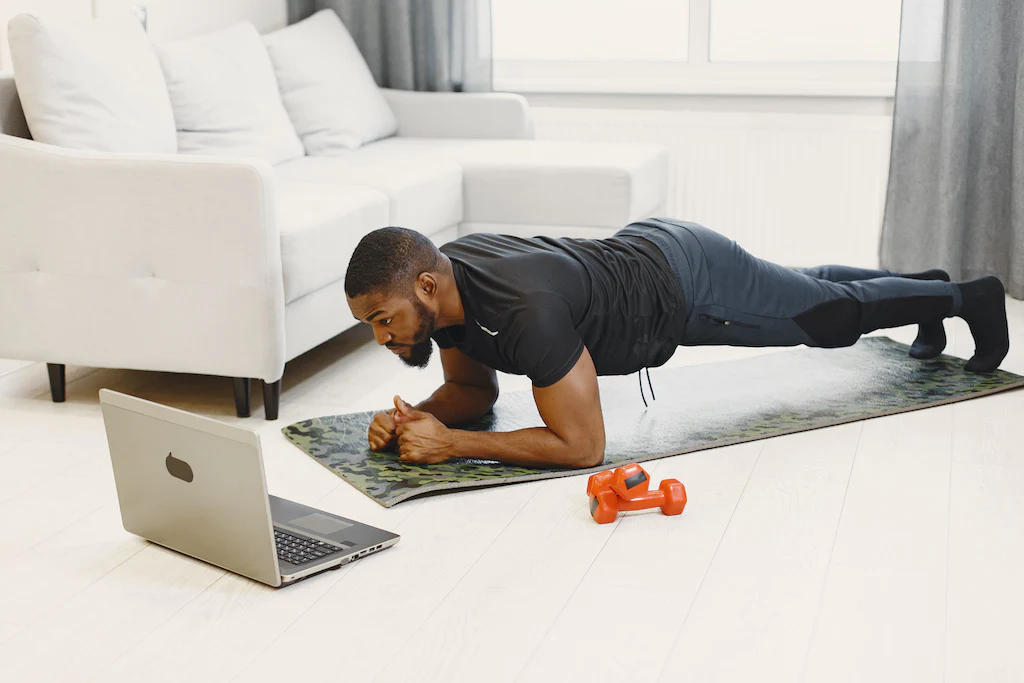
Solution: Embrace bodyweight exercises. You can get a phenomenal workout in any hotel room using only gravity. Pack a simple set of resistance bands, which take up almost no space and add intensity to your routine. Prioritize the hotel gym, even for just a few minutes, when available.
“I Have Young Kids”
Solution: Stop trying to find solo time. Involve your kids in the process. Do “Mommy/Daddy and Me” workouts where you use them as resistance for squats or play active games. Utilize naptime or the brief period after they go to bed for a quick HIIT circuit.
“I’m Too Exhausted After Work”
Solution: Apply the ten-minute rule. Commit to just ten minutes of light movement, whether it’s a walk or a simple stretch routine. Often, the activity itself generates energy, and you’ll find yourself pushing for fifteen or twenty minutes. If after ten minutes you still feel drained, stop—you kept your commitment, and that is a victory.
Conclusion
Fitness is not about finding more time; it is about making the time you have count. By leveraging time-efficient workouts, mastering meal prep, prioritizing sleep, and adopting an unwavering mindset of consistency, you can transform your health without sacrificing your demanding life. The tools are simple, the methods are proven, and the results are profound. You have the power to maximize your health with minimal time, making your fitness journey a permanent, integrated part of your successful, busy life.
Start today! Pick just one time-efficient strategy from this guide—whether it’s a fifteen-minute HIIT session or committing to fitness snacking every day—and integrate it into your routine immediately. Your energy, your health, and your longevity cannot wait.