






The gym is optional, but your heart health is not. For many people, scheduling travel time, battling crowds, or finding the right equipment makes consistent cardiovascular exercise feel impossible. The good news is that you can achieve a powerful, effective, and high-intensity cardio workout right in your own living room.
This guide provides simple, no-equipment-needed routines and strategies for maximizing your heart rate and boosting endurance using nothing more than your body and a small space. These workouts are efficient, scalable, and perfect for maintaining a healthy active lifestyle.
Maximizing Efficiency: The Power of Bodyweight Cardio
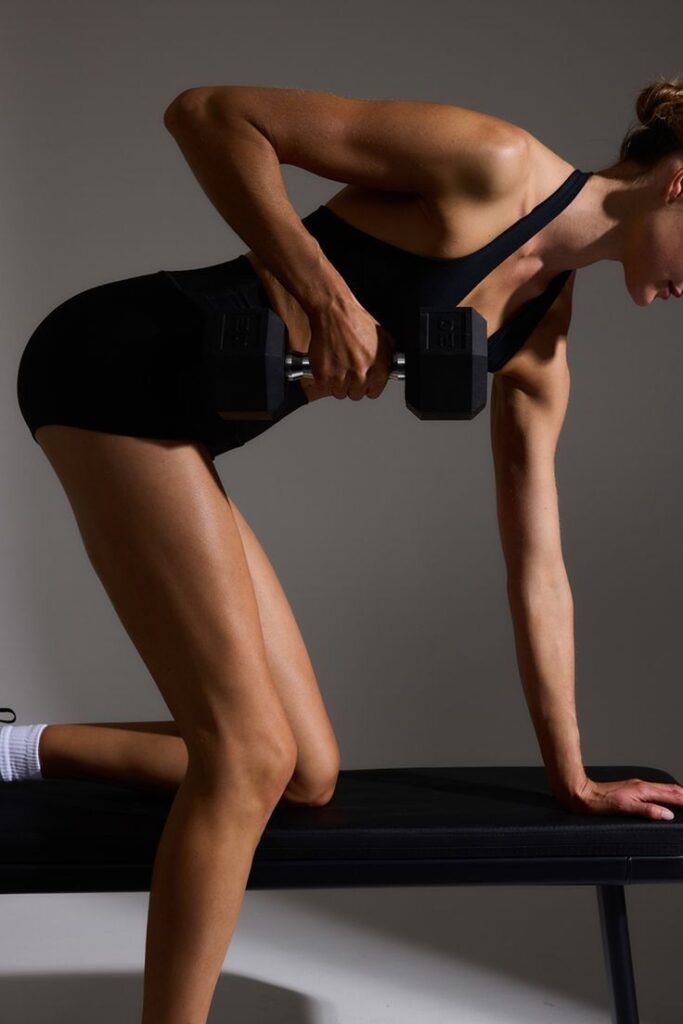

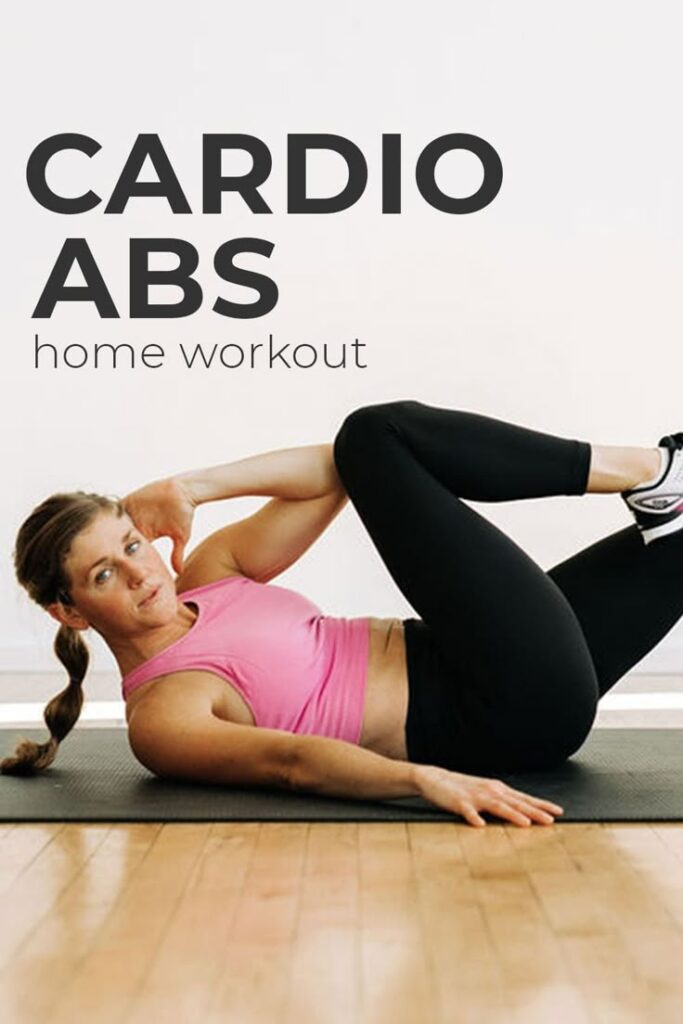
The best at-home cardio relies on compound movements—exercises that use multiple muscle groups simultaneously. This quickly elevates your heart rate and provides a total-body challenge, saving you time. We’ll focus on routines that utilize high-intensity interval training (HIIT) for maximum calorie burn and fitness gain.
Beginner-Friendly Bodyweight Circuit (Low-Impact Options Included)
Perform each exercise for 30 seconds, followed by 15 seconds of rest. Complete the circuit 3 times with a one-minute rest between rounds.
| Exercise | Description | Low-Impact Modification |
| High Knees | Run in place, bringing knees toward your chest. Use your arms for momentum. | March in place, lifting knees high and driving arms. |
| Butt Kicks | Jog in place, kicking your heels up toward your glutes. | Stand and alternate kicking heels to your glutes, keeping a fast pace. |
| Squat Jumps | Perform a standard squat, then explode upward into a jump, landing softly back into a squat position. | Perform standard bodyweight squats without the jump. Focus on speed and depth. |
| Plank Jacks | Start in a high plank position. Jump both feet out wide, then jump them back together, like a horizontal jumping jack. | Instead of jumping, step one foot out at a time, then back in (step-out plank). |
| Mountain Climbers | Start in a high plank. Alternately drive your knees toward your chest in a running motion. | Slow down the movement, driving knees in one at a time, holding the plank form. |
Intermediate Full-Body HIIT Blast

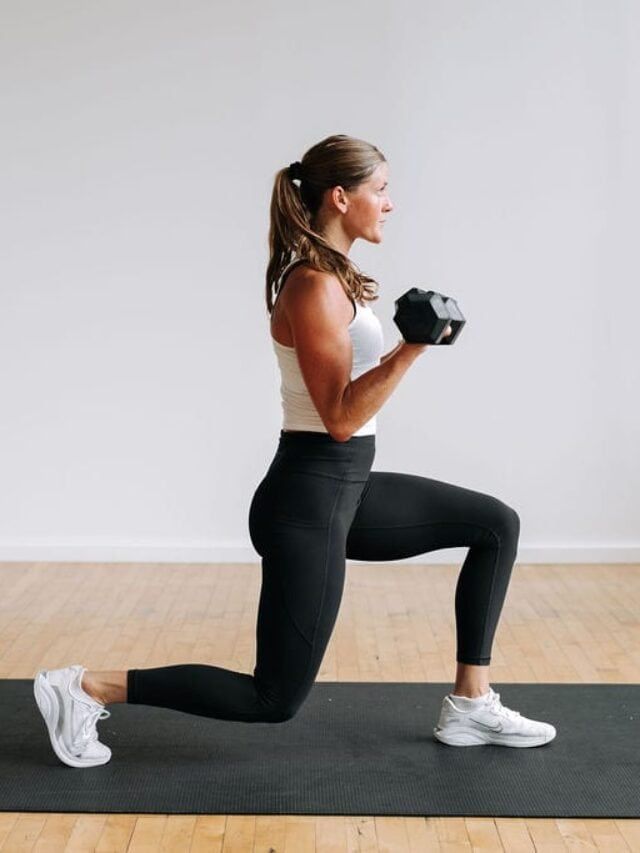
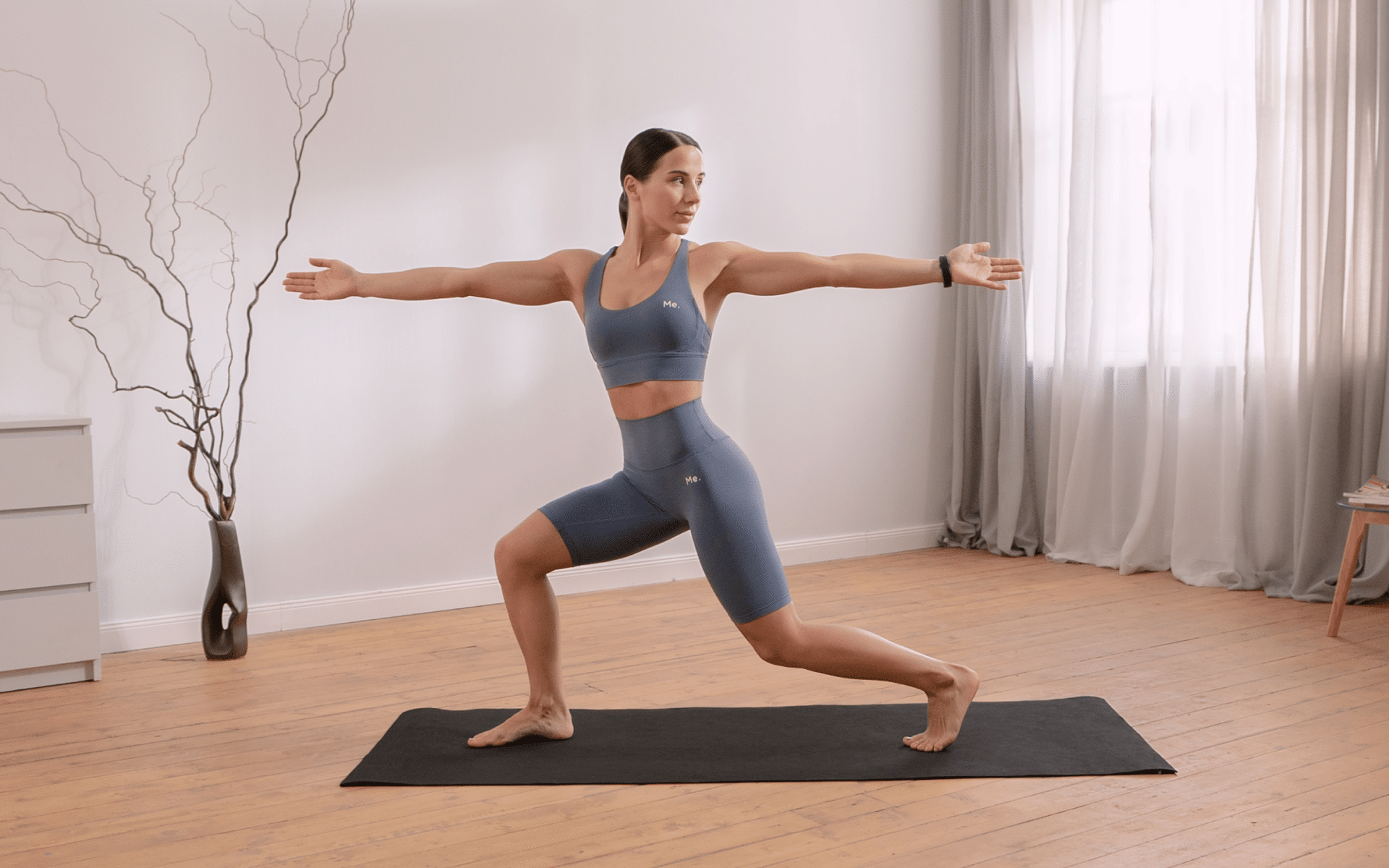
Perform each exercise for 40 seconds, followed by 20 seconds of rest. Complete the sequence 4 times with a one-minute rest between rounds.
- Burpees (Full): Drop down, kick feet back to plank, push up (optional), jump feet forward, and explode into a vertical jump with hands overhead.
- Reverse Lunges with Knee Drive: Step back into a lunge, then power forward, driving the back knee up toward your chest. Alternate legs each round.
- Speed Skaters: Jump laterally from one foot to the other, sweeping the trailing leg behind you. Touch your hand to the floor on the opposite side to engage your core.
- Jumping Jacks: The classic full-body move to keep the heart rate up. Focus on speed and full extension of the arms and legs.
- Tuck Jumps: Jump straight up, pulling your knees toward your chest. Land softly. If the tuck jump is too difficult, substitute with High Knees.
The Science of Intensity: Why HIIT Works
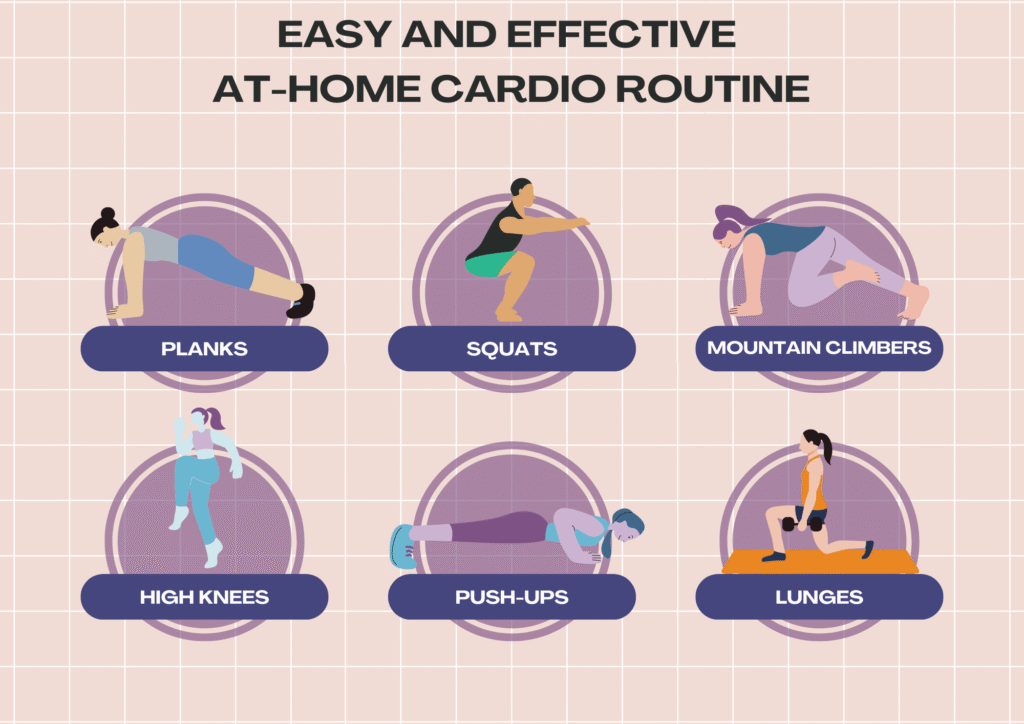
For cardio workouts at home, HIIT is the most effective approach for busy adults. It involves short bursts of near-maximal effort followed by brief recovery periods.
- Time Efficiency: A high-quality HIIT session can be completed in just fifteen to twenty-five minutes, making it perfect for fitting into a packed schedule.
- The Afterburn Effect (EPOC): This intense method causes your body to consume oxygen at a higher rate post-workout, known as Excess Post-exercise Oxygen Consumption. This means you continue to burn calories at an elevated rate long after you finish exercising—a huge advantage over steady-state cardio.
- Improved Cardiovascular Fitness: HIIT rapidly improves your VO2 max (the maximum amount of oxygen your body can use), making your heart and lungs more efficient over time.
Structuring Your At-Home Cardio Routine
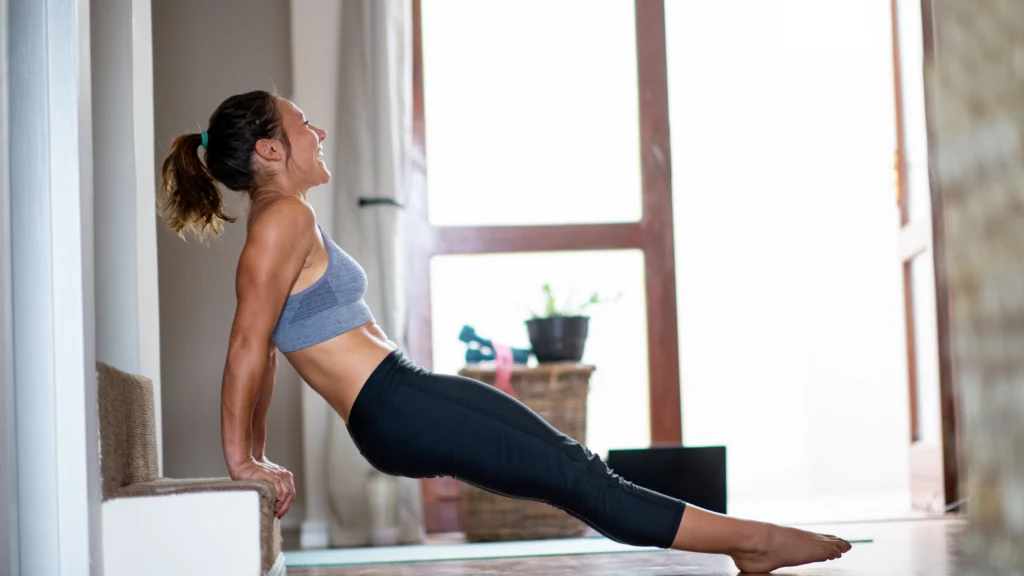
To ensure safety and maximize results, structure your workout with these essential phases:
Phase One: The Warm-Up (5 Minutes)
Never skip this. A dynamic warm-up prepares your joints and muscles for movement, preventing injury.
- Arm circles (forward and backward)
- Leg swings (front-to-back and side-to-side)
- Torso twists or gentle standing rotations
- Light march or jog in place
- A few easy bodyweight squats
Phase Two: The Main Workout (15–25 Minutes)
Choose one of the circuits above, or create your own by selecting five to six exercises and alternating high-effort intervals with brief rest periods. Focus on maintaining proper form throughout the work intervals, even when you feel fatigued.
Phase Three: The Cool-Down and Stretch (5 Minutes)
Bringing your heart rate down gradually and stretching the major muscle groups is crucial for recovery.
- Walk slowly in place, taking deep breaths.
- Hold static stretches, such as a hamstring stretch, quad stretch, or standing calf stretch, for 30 seconds each. Do not bounce or overstretch.
Essential Tips for At-Home Cardio Success
Focus on Form, Not Speed (Initially)
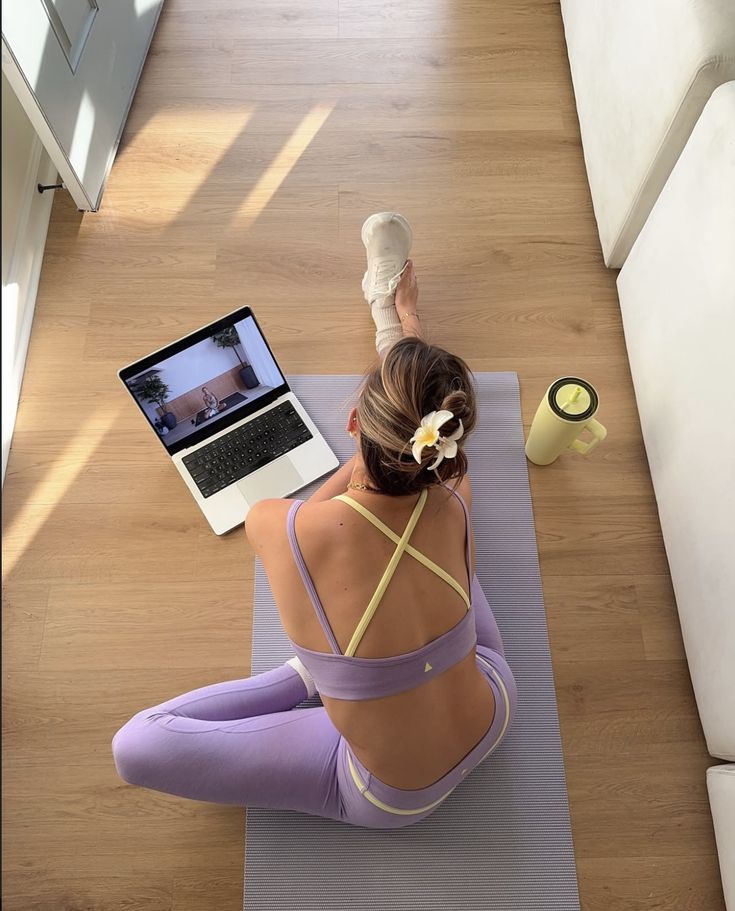
It’s tempting to rush through the movements, but poor form leads to injury. Watch videos of the exercises to ensure you understand the technique. Once your form is solid, increase your speed and intensity.
Use Music for Motivation
Music with a fast tempo or high-energy beat can significantly improve performance and make the time fly by. A good workout playlist is an incredible tool for intrinsic motivation.
Track Your Progress
Use a timer app or simply an exercise notebook to track your routines. Seeing yourself increase the number of rounds, shorten the rest periods, or improve your pace provides essential non-scale victories that fuel consistency.
Listen to Your Body
If an exercise causes sharp pain, stop immediately and choose an alternative movement. The goal is to challenge yourself, not hurt yourself. Always consult a healthcare professional before starting any new exercise routine, especially if you have pre-existing conditions.
Call to Action
Your high-powered cardio workout is ready to go. You have all the tools and no more excuses about travel time or equipment.
Pick a time, set your timer, and complete the Beginner-Friendly Bodyweight Circuit today.
What time slot in your schedule can you commit to for your first at-home cardio session?
Frequently Asked Questions (FAQ)
Q: How often should I do at-home cardio to see results?
A: Aim for three to five sessions per week. For optimal results, alternate between higher intensity (like a HIIT circuit) and moderate intensity (like a brisk walk or bike ride). Consistency is more important than the length of any single workout.
Q: Do I need special equipment for high-intensity cardio at home?
A: Absolutely not. The most effective at-home cardio relies on bodyweight movements like burpees, squat jumps, and high knees. These exercises use your own mass for resistance and require zero equipment, making them scalable to any fitness level.
Q: Is a short, intense workout better than a long, easy one?
A: For busy individuals, yes. High-Intensity Interval Training (HIIT), which is short and intense, triggers the Afterburn Effect (EPOC), meaning you burn more calories after the workout is over. A fifteen-to-twenty-minute HIIT session can yield greater fitness gains than an hour of steady, low-intensity exercise.
Q: How can I make my at-home cardio workout feel less boring?
A: Music is key—use a playlist with a fast tempo to drive intensity. You can also try tracking different metrics (like how many rounds you complete in a set time) or follow guided dance-based cardio videos to add variety and motivation.
Q: What should I do if I get a side stitch or feel lightheaded during an intense workout?
A: If you feel a side stitch, slow down to a walk and take deep, slow breaths, focusing on expanding your ribcage. If you feel dizzy or lightheaded, stop the exercise immediately, sit down, and hydrate. Always listen to your body and prioritize safety over pushing through pain.